
Crassula tecta
Crassula tecta
Description
Growing requirements
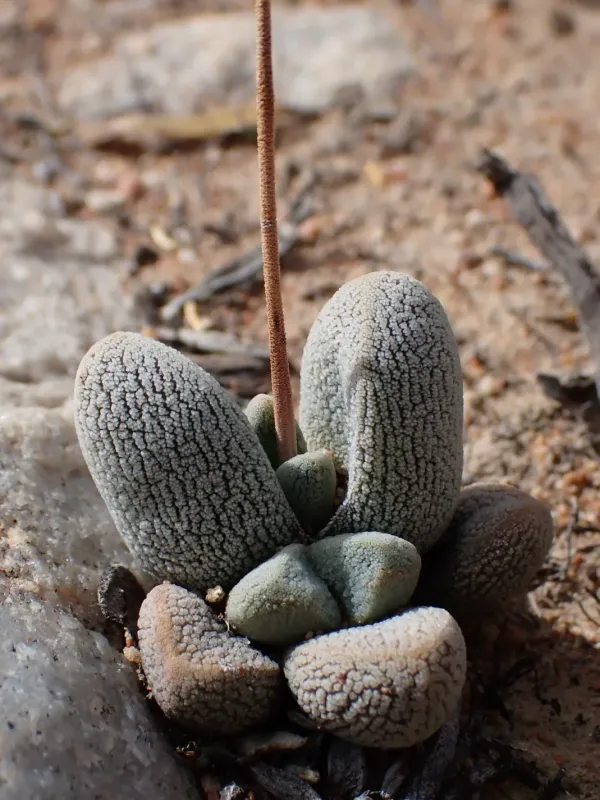
Crassula tecta is a small, slow-growing succulent species belonging to the Crassulaceae family. It is native to the arid regions of South Africa, specifically known for thriving in rocky, desert-like environments.
The plant is distinguished by its tiny, thick leaves that feature a unique surface texture covered in white, scale-like papillae. These physical adaptations serve to reflect intense sunlight and reduce water loss through transpiration.
In cultivation, this species requires a highly porous, well-draining soil mix, typically consisting of pumice, coarse sand, and a minimal amount of organic matter. Proper drainage is the most critical factor in preventing root rot.
The plant demands bright, direct light for several hours a day to maintain its compact growth habit and natural coloration. During the dormant winter season, it requires cooler temperatures and significantly reduced irrigation.
Economically, Crassula tecta is primarily utilized in the nursery trade as an ornamental specimen for succulent enthusiasts and xeriscaping projects. Its architectural aesthetic makes it highly sought after for small-scale botanical arrangements.
Main diseases and pests
The primary threats to Crassula tecta include fungal pathogens, such as Phytophthora or Pythium, which flourish in overly wet, stagnant soil conditions. Maintaining adequate air circulation is essential for plant health.
Common pests affecting this crop include mealybugs, which tend to hide within the dense rosette of leaves, and spider mites. Integrated pest management, including systemic insecticides and proper cultural control, is recommended for professional cultivation.