
Spoon-leaved Crassula
Crassula spathulata
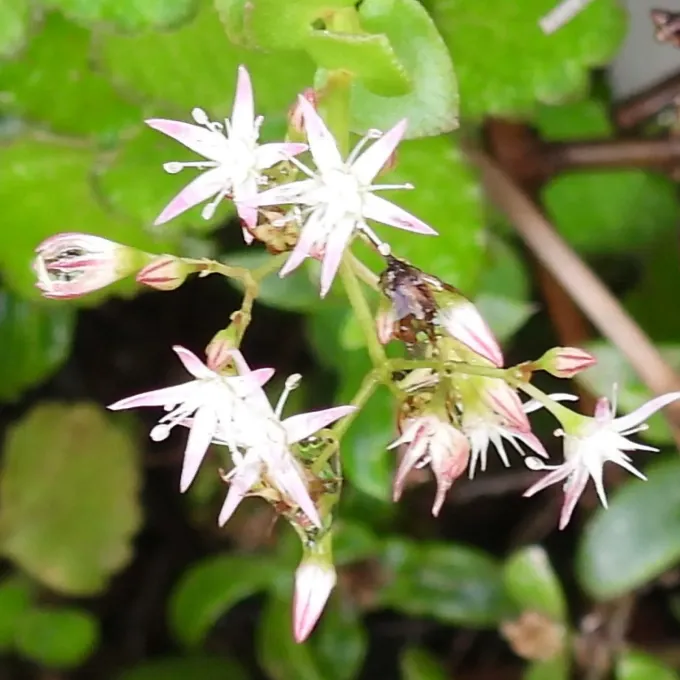
Description
Growing requirements
The Spoon-leaved Crassula (Crassula spathulata) belongs to the Crassulaceae family. This perennial succulent plant is native to South Africa, where it thrives in moist, shaded environments.
Botanically, it is characterized by its trailing stems and distinctively spoon-shaped leaves with serrated margins, making it an excellent choice for hanging baskets or ground covers.
The plant requires bright, indirect light to maintain its compact growth habit. Exposure to direct intense sunlight can easily cause leaf scorch, particularly in warmer climates.
Soil requirements involve a well-draining succulent mix. It is essential to ensure that the potting medium remains porous, allowing air to reach the roots while draining excess water.
Regarding climate, the plant prefers moderate temperatures between 20°C and 25°C during the growing season and requires a cooler resting period during winter to thrive.
Main diseases and pests
The most significant threat to Crassula spathulata is root rot, typically caused by overwatering or soil that does not provide adequate drainage.
Pest management should focus on monitoring for mealybugs and spider mites, which often hide in the leaf axils and on the undersides of the foliage.
If an infestation occurs, horticultural soaps or specific systemic insecticides should be applied to prevent the spread of pests throughout the collection.
Fungal leaf spot diseases may develop if the plant is kept in conditions with poor air circulation, combined with high humidity levels.
Proactive maintenance includes inspecting the plant weekly and ensuring that the top layer of the soil has dried out significantly before performing the next watering.