
Crassula socialis
Crassula socialis
Description
Growing requirements
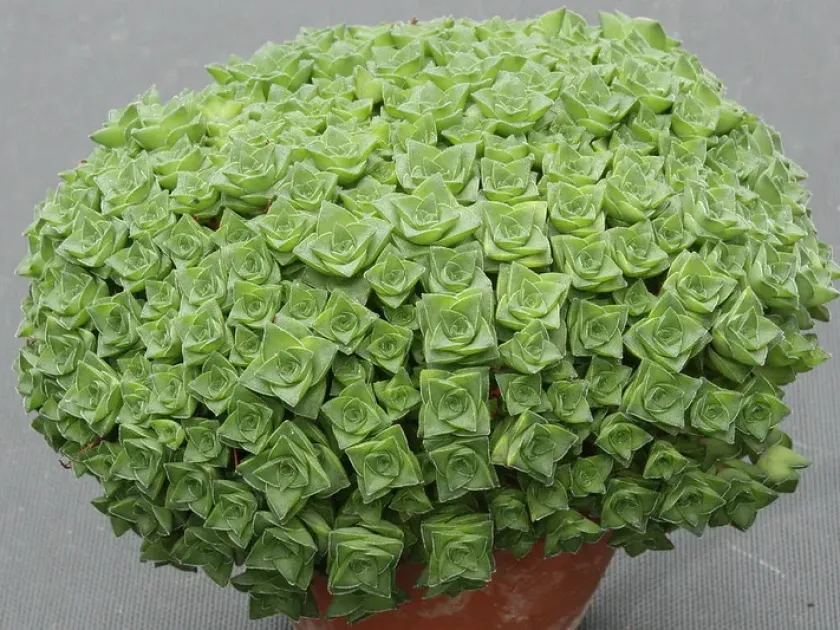
Crassula socialis is a miniature succulent species belonging to the Crassulaceae family. Originating from the rocky terrains of South Africa, this plant has evolved to thrive in arid environments, making it a highly resilient species for managed cultivation.
Botanically, it is characterized by its compact, cushion-forming habit. It develops small, closely packed leaves on thin stems, creating dense rosettes that branch out over time. Its foliage often exhibits a subtle blue-green hue, with edges that can blush under strong light.
The primary requirement for this culture is a fast-draining substrate. Growers must ensure the medium allows for excellent aeration, typically by incorporating mineral amendments like pumice, coarse sand, or perlite to prevent the root system from remaining saturated.
Light intensity is critical for maintaining the plant's aesthetic integrity. In indoor or greenhouse settings, Crassula socialis requires bright, indirect light. Insufficient light leads to etiolation, where stems stretch and lose their characteristic density, weakening the plant's structure.
Temperature management should follow seasonal cycles, with active growth occurring during warmer periods. During winter, the plant benefits from a cool dormancy period, which helps prevent unwanted growth spurts and prepares the plant for a healthy, vigorous spring season.
Main diseases and pests
Mealybugs are the most persistent pest affecting Crassula socialis. These insects settle in the tight spaces between leaves, feeding on plant sap. Regular monitoring is essential, and any infestations should be treated promptly with targeted systemic insecticides.
Root aphids pose a hidden threat by colonizing the root zone, which can inhibit nutrient uptake. If the plant shows signs of stunted growth despite adequate care, growers should inspect the root system and treat the soil with appropriate pesticides to eradicate the colony.
Fungal rots, caused by excessive soil moisture, are the most common cause of plant failure. When the medium remains damp for too long, oxygen circulation to the roots stops, creating ideal conditions for decay pathogens to take hold and destroy the vascular system.
Overhead watering or splashing water into the center of the rosettes should be avoided, as trapped moisture creates a site for bacterial infection and soft rot. Maintaining a dry crown is a key aspect of preventing these common horticultural issues.
To ensure long-term health, growers must maintain clean cultivation practices, including the use of sterilized pots and tools. By managing moisture levels and providing optimal airflow, producers can significantly reduce the pressure from both insects and pathogenic fungi.