
Crassula sladenii
Crassula sladenii
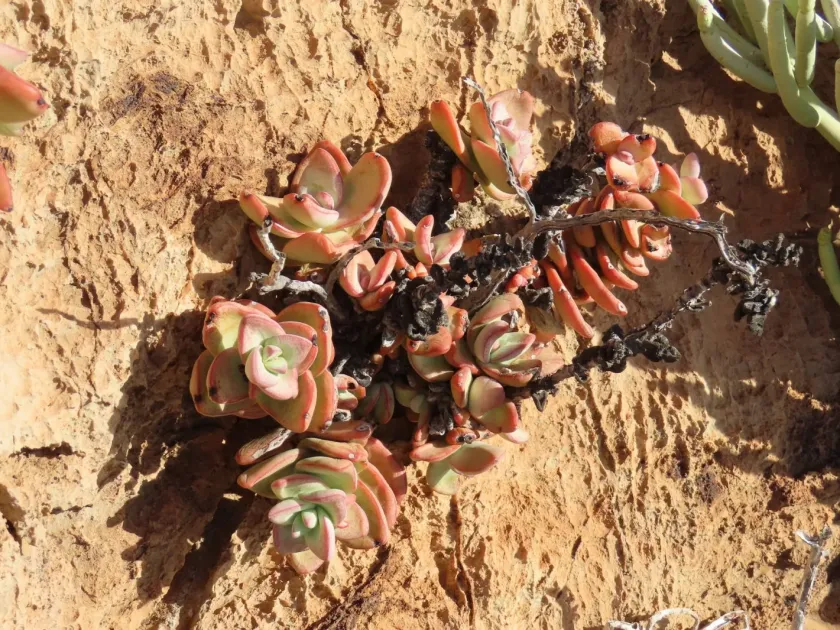
Description
Growing requirements
Crassula sladenii is a perennial succulent belonging to the Crassulaceae family. Native to the rocky habitats of Southern Africa, this plant has evolved to survive in arid environments characterized by intense sunlight and long periods of water scarcity.
The plant is known for its slow-growth habit, forming compact clusters of fleshy, grey-green leaves. Its stems tend to become woody over time, while the leaves are arranged in a dense, opposite pattern, which serves as a highly efficient mechanism for water storage in harsh conditions.
For successful cultivation, Crassula sladenii requires a well-drained, gritty soil mix with very low organic content. It is critical to ensure that the potting medium does not retain excess water, as the species is highly susceptible to root and stem rot if kept in damp soil.
This succulent thrives in bright, indirect light for at least six to eight hours a day. Insufficient light exposure will result in etiolation, where the stems stretch and become weak, significantly reducing the aesthetic value and overall structural integrity of the plant.
Optimal growing temperatures range between 20-25 degrees Celsius during the active growing season. A cooler period with temperatures around 10-15 degrees Celsius during the winter months is beneficial for mimicking natural conditions and promoting stronger health.
Main diseases and pests
Root and stem rot remain the most significant threats to Crassula sladenii, typically triggered by overwatering or poor drainage. To prevent these conditions, growers should utilize porous pots and a substrate composed mainly of inorganic materials like coarse sand or pumice.
Mealybugs are the most common pests, often hiding in the crevices between the fleshy leaves. If an infestation occurs, it is essential to treat the plant immediately with systemic insecticides or targeted applications of rubbing alcohol to remove the insects.
Spider mites can occasionally affect the plants, particularly when air humidity is extremely low. Early indicators include the presence of fine webbing or tiny, discolored spots on the leaf surface, which necessitates increasing ambient humidity and washing the foliage.
Grey mold, or Botrytis, can manifest in conditions of high humidity combined with poor air circulation. To manage this, infected tissue should be removed immediately with sterilized tools, followed by an application of a copper-based fungicide to protect healthy parts of the plant.
Regular monitoring of the root zone and the renewal of the topsoil layer are recommended to maintain plant vigor. By following strict hygiene practices, such as disinfecting shears between plants, the risk of transferring fungal or bacterial pathogens is greatly minimized.