
Crassula sarmentosa
Crassula sarmentosa
Description
Growing requirements
Crassula sarmentosa is a succulent plant belonging to the Crassulaceae family. Native to South Africa, it is widely recognized for its trailing growth habit, making it an excellent choice for hanging baskets or elevated planters.
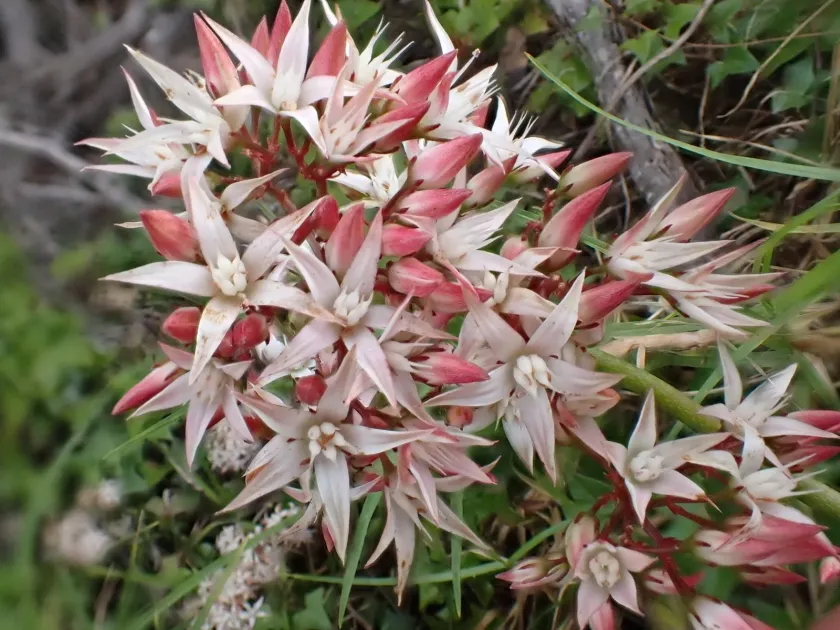
Botanically, the plant features fleshy, ovate leaves that often display serrated margins and can turn reddish when exposed to specific light conditions. It produces small, star-shaped flowers that appear in clusters at the ends of the branches.
For optimal growth, Crassula sarmentosa requires bright, indirect light. While it can tolerate some direct morning sunlight, intense afternoon sun may cause leaf scorching. In indoor settings, a south or west-facing window is usually ideal.
The soil must be well-draining. A typical cactus or succulent potting mix, enhanced with perlite or coarse sand, is recommended to ensure that moisture does not accumulate around the root system, which is crucial for preventing physiological stress.
Watering should be performed using the soak-and-dry method. During the growing season, allow the top third of the soil to dry out completely before watering again, while in the dormant winter period, water consumption should be significantly reduced.
Main diseases and pests
The primary threat to Crassula sarmentosa is root rot, caused by overwatering or poor soil drainage. When the roots remain wet for extended periods, the plant loses its ability to absorb nutrients and eventually collapses.
Mealybugs are the most common pest found on this species. They hide in the leaf axils and stems, secreting a white, cottony substance that protects them while they feed on the plant's sap.
Spider mites can also be problematic in environments with low humidity. They typically manifest as tiny, dust-like particles and faint webbing, which can lead to leaf discoloration and premature dropping of foliage.
Scale insects may attach themselves to the stems, creating hardened brown bumps. These pests are resilient, and their presence requires immediate intervention with horticultural oils or mechanical removal.
To maintain a healthy crop, growers should emphasize good airflow and avoid crowding plants together. Regular monitoring for early signs of distress is the best defense against both bacterial and pest-related outbreaks.