
Crassula perforata
Crassula perforata
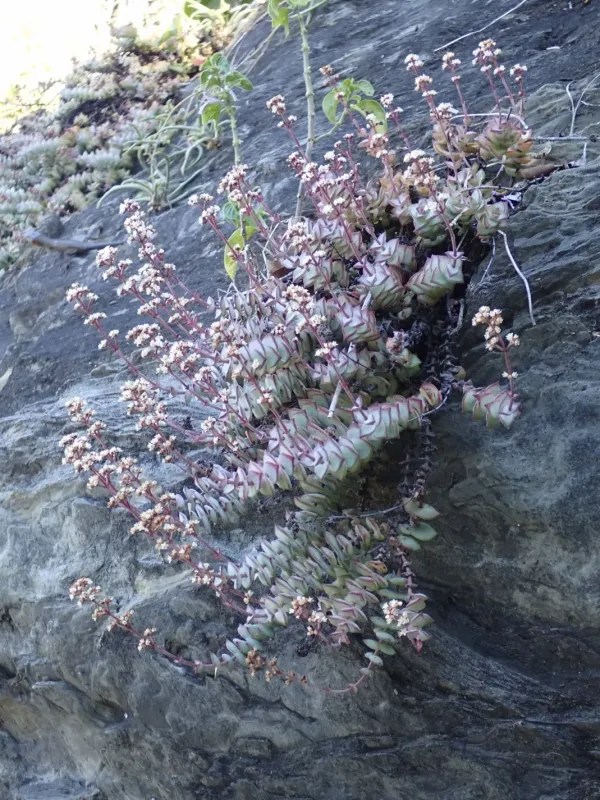
Description
Growing requirements
Crassula perforata, commonly known as the string of buttons, is a perennial succulent belonging to the Crassulaceae family. It is native to the arid regions of South Africa, where it thrives in rocky, well-drained soils.
This species requires bright, indirect sunlight to maintain its compact growth form. When kept in low light, the plant becomes leggy and loses its distinct stacked appearance, which is its primary aesthetic feature.
The soil must be porous and highly breathable. A standard succulent potting mix, amended with extra pumice, perlite, or coarse sand, is necessary to prevent water retention and root asphyxiation during the growth season.
Temperature management is crucial; the plant prefers warm daytime temperatures of 20-25°C. During the winter months, it enters a dormant phase and benefits from slightly cooler nights, ideally around 12-15°C, which can trigger blooming.
Watering should be conducted using the soak-and-dry method. It is essential to ensure that the substrate is completely dry before adding more water, as moist conditions are extremely detrimental to the root system.
Main diseases and pests
The most common disease affecting this plant is root rot, caused by overwatering or poor drainage. Once roots begin to decompose, the infection often spreads quickly to the stem, making recovery difficult.
Mealybugs are the primary pest concern for Crassula perforata. Because the leaves overlap, these insects often hide in the tight spaces between them, making them hard to reach with contact pesticides.
Aphids can occasionally infest the new growth or flower stalks. Although less common, they can cause significant deformation of the leaves if left untreated by early intervention measures.
Spider mites are another potential threat, particularly in dry, stagnant air. They feed on plant sap and can cause fine webbing and discoloration, which ruins the texture of the leaves.
Effective management includes maintaining good air circulation, occasional systemic insecticide applications, and immediate isolation of any infected specimens to prevent the spread of pests throughout the collection.