
Crassula mesembryanthemoides
Crassula mesembryanthemoides
Description
Growing requirements
Crassula mesembryanthemoides belongs to the Crassulaceae family and is a distinctive succulent species native to the arid environments of South Africa. This crop has evolved to thrive in nutrient-poor, rocky substrates, making it exceptionally drought-resistant but sensitive to moisture accumulation.
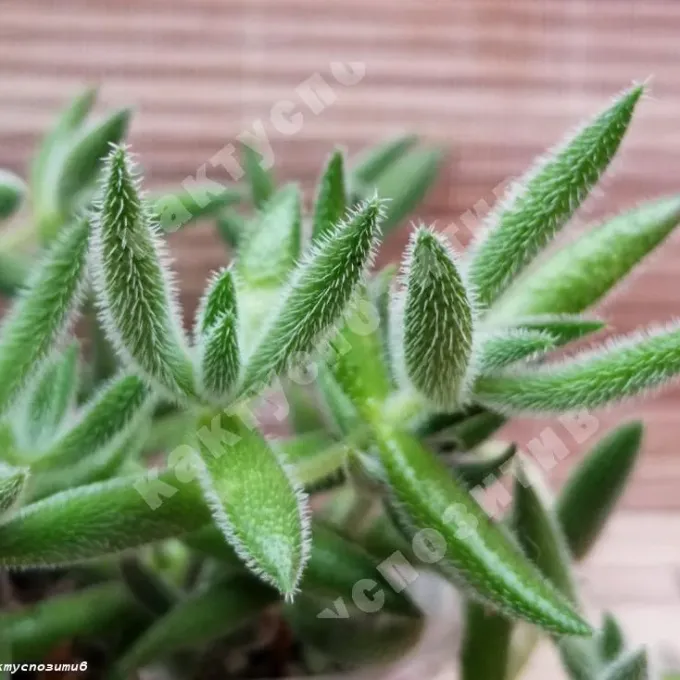
Botanically, the plant is characterized by its succulent, fleshy leaves that are covered in fine, stiff hairs, providing a unique textured appearance. It grows as a small, branched shrub, with stems that tend to lignify at the base as the plant matures, adding to its structural stability.
Optimal cultivation requires a well-draining soil mix that prevents water stagnation. A blend of coarse sand, grit, and standard potting soil is ideal for ensuring that excess water drains away quickly, protecting the fibrous root system from common fungal pathogens.
The climate requirements for this crop involve a high demand for bright, direct light. In professional greenhouse settings, maintaining high light levels is essential to keep the plant compact and to encourage the characteristic silvery-green color of the foliage during the growing season.
Temperature management is critical for the long-term vitality of the crop. It is best grown in environments where temperatures stay above 10°C, as it cannot withstand frost. Proper ventilation is also a requirement to prevent high humidity, which can lead to fungal issues and stunted growth.
Main diseases and pests
The primary threat to the health of Crassula mesembryanthemoides is overwatering, which predisposes the root system to root and crown rot. These conditions are typically caused by pathogens such as Fusarium species, which proliferate in waterlogged, stagnant soil conditions.
Insect pests such as the mealybug are frequent threats, often hiding in the crevices between leaves. Spider mites also pose a risk in dry environments, as they feed on the succulent tissues, leaving unsightly yellow spots and weakening the overall vigor of the plant.
Management of these threats relies heavily on cultural control practices. Providing adequate spacing between plants ensures proper airflow, which reduces the moisture levels on the foliage and inhibits the growth of both fungal spores and soft-bodied insect populations.
Chemical intervention may be necessary in severe infestations. Systemic insecticides are highly effective against mealybugs, as they are absorbed by the plant and provide long-term protection, while miticides should be used specifically for outbreaks of spider mites.
Routine inspections are essential to identify early signs of infestation or rot. By maintaining a clean environment and ensuring that the plants are not subjected to sudden changes in temperature or moisture, agronomists can significantly reduce the risk of crop failure due to common diseases.