
Milkweed Crassula
Crassula lactea
Description
Growing requirements
Milkweed Crassula (Crassula lactea) is a perennial herbaceous plant belonging to the Crassulaceae family. In nature, this species originates from South Africa, where it grows in rocky slopes and dry shrublands.
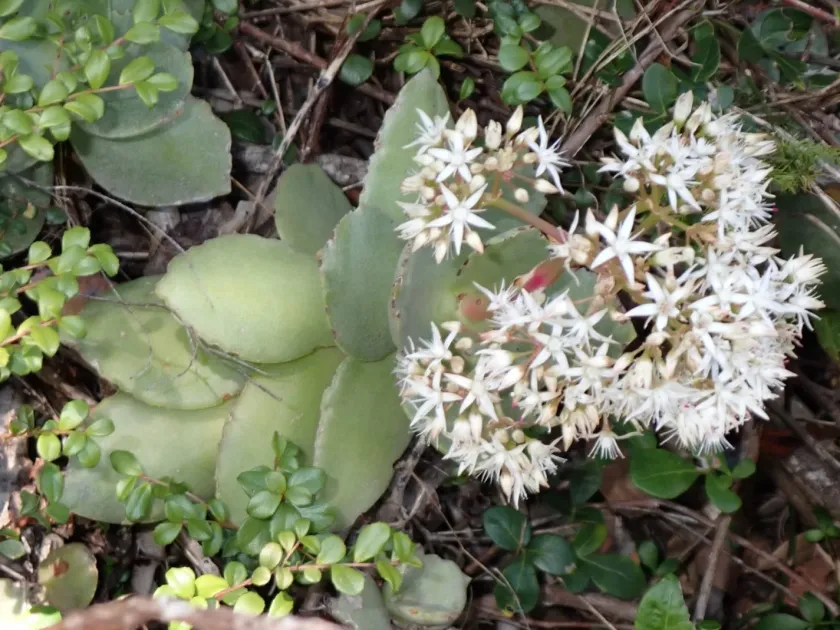
Botanically, the crop is a branched shrub with opposite, obovate leaves of green color with a white margin along the edge. During the flowering period, which usually falls in the autumn-winter season, the plant produces inflorescences consisting of small white star-shaped flowers.
For optimal development, the crop requires bright, indirect lighting, although it is capable of withstanding light shading. Direct sunlight during peak afternoon hours may cause leaf scorching, so placement on eastern or western windowsills is recommended.
The temperature regime should be moderate: a comfortable range in summer is +20...+25°C, while in the winter period, a cool rest at +12...+15°C is desired. The plant possesses moderate drought resistance and does not tolerate standing water in the soil substrate.
The soil for cultivation should be loose, well-drained, and have a neutral to slightly acidic pH level. It is recommended to use ready-made mixtures for cacti and succulents with the addition of perlite or coarse sand to improve root aeration.
Main diseases and pests
The main pests for this species are mealybugs and spider mites, which most frequently infest the plant when humidity conditions are violated or air circulation is poor.
Regarding diseases, root rot is the most dangerous, occurring due to waterlogging of the substrate or the use of heavy, non-porous soil, which blocks oxygen access to the roots.