
Crassula justi-corderoyi
Crassula justi-corderoyi
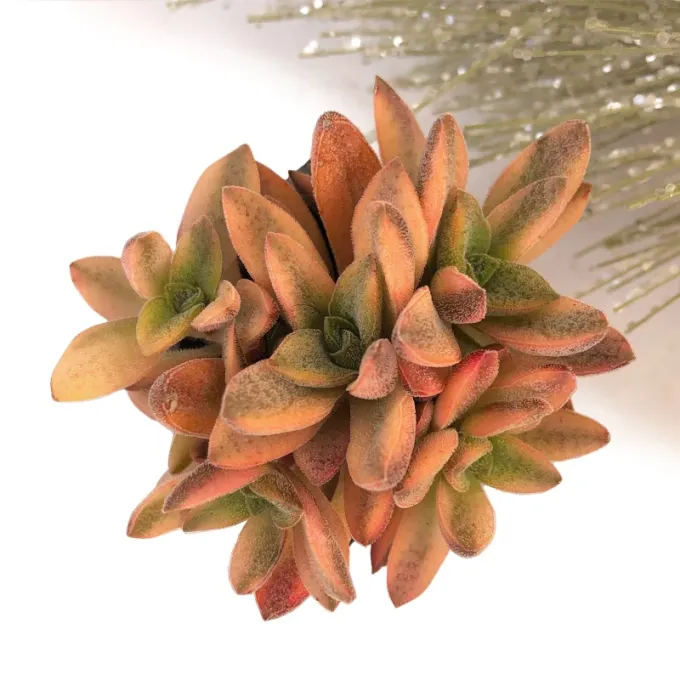
Description
Growing requirements
Crassula justi-corderoyi is a distinctive succulent belonging to the Crassulaceae family. Originally native to arid regions of Southern Africa, this species has evolved specialized anatomical features to survive in environments with infrequent rainfall.
To cultivate this species successfully, growers must prioritize high light intensity. Exposure to full or bright filtered sunlight is necessary to maintain the plant's structural integrity and its typical, compact growth pattern throughout the vegetative cycle.
The substrate requirement for this culture involves a highly porous, gritty mix. Ideal components include sharp sand, perlite, and small gravel, which facilitate rapid water drainage and prevent the root suffocation that often leads to plant mortality.
Watering practices should mimic the plant's natural habitat cycle. Irrigation is performed only when the root zone is completely desiccated; waterlogging must be avoided at all costs, especially during the dormant season when metabolic rates decrease.
Temperature management is a key component of the plant's agrotechnics. During the active growth phase, temperatures between 18°C and 25°C are optimal, while a cooler rest period during winter promotes better overall health and future bloom cycles.
Main diseases and pests
Root and stem rot caused by fungal pathogens represent the most significant threat to Crassula justi-corderoyi. These conditions are almost exclusively linked to overwatering or the use of heavy, water-retentive potting media.
Mealybugs are a common pest problem for this succulent. These insects congregate in leaf axils, draining sap and weakening the plant's vitality, which necessitates prompt application of systemic or contact insecticides.
Spider mites may infest the foliage if the ambient humidity is consistently too low, leading to discoloration and stunted development. Regular misting or monitoring for fine webbing can help in the early detection of these pests.
Stagnant air circulation is a major factor contributing to the development of opportunistic fungal infections. Ensuring adequate ventilation in the growing environment is essential to mitigate these biological risks.
Preventative care also involves maintaining hygiene during propagation and maintenance. By providing a clean environment and balanced nutritional levels, the grower significantly reduces the plant's susceptibility to typical greenhouse and household pests.