
Crassula globularioides
Crassula globularioides
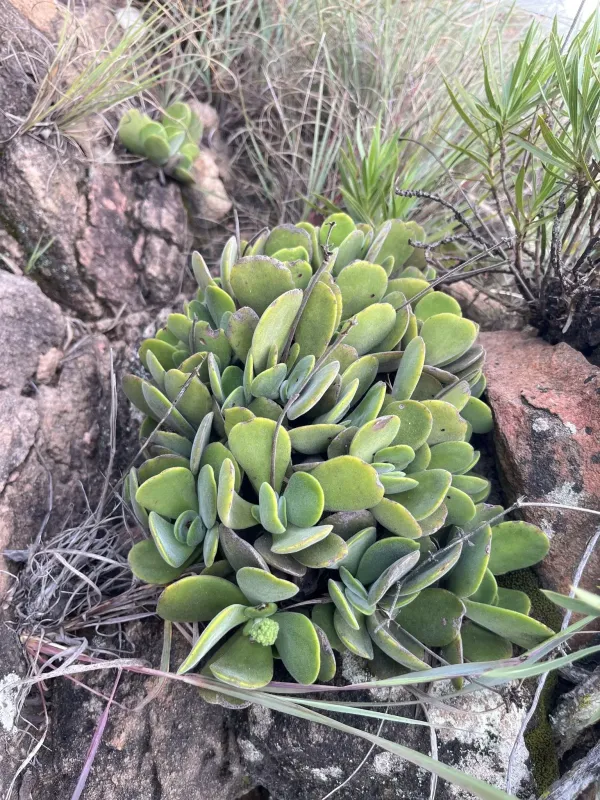
Description
Growing requirements
Crassula globularioides is a perennial succulent species belonging to the Crassulaceae family. Native to the rocky terrains of South Africa, it has evolved to survive in nutrient-poor but well-draining environments, characterizing its resilience.
The plant features succulent foliage arranged in rosettes or along branching stems. Depending on the specific variety, the leaves can exhibit interesting color variations, often deepening in intensity when exposed to adequate ultraviolet radiation.
Cultivation requires significant attention to light intensity. A bright, sunny position is essential to prevent the plant from becoming etiolated, which ruins its natural, compact structural integrity and weakens the stem system.
Temperature management is another pillar of success. While it thrives in warm temperatures during the active growing season, it benefits from a cooler dormant period, which is crucial for triggering natural flowering cycles in mature specimens.
The soil profile must mimic the rocky nature of its origin. A high-quality inorganic mix, primarily composed of pumice, lava rock, and coarse sand, ensures that water drains quickly, thereby maintaining the health of the delicate root network.
Main diseases and pests
The primary agricultural threat to this species is overwatering, which facilitates the rapid onset of fungal decay. Ensuring that the root zone is allowed to dry out completely between irrigation cycles is the most effective preventative measure.
Mealybugs are the most common pest found in commercial and residential collections. They typically colonize the tight spaces between leaves and stems, requiring immediate mechanical removal or the use of targeted horticultural soaps.
Aphids can occasionally colonize tender new growth during the spring flush. Monitoring for these small insects is vital to prevent leaf distortion and the transmission of viral pathogens between different plant stocks.
Root aphids may also be present, especially in contaminated potting media. These are difficult to detect until the plant begins to show significant stress, such as yellowing leaves or stunted growth, requiring a soil drench with an appropriate pesticide.
Maintaining proper hygiene by removing dead foliage and ensuring adequate airflow around the plant canopy significantly reduces the risk of most common pests and opportunistic infections that could compromise the plant's health.