
Crassula fallax
Crassula fallax
Description
Growing requirements
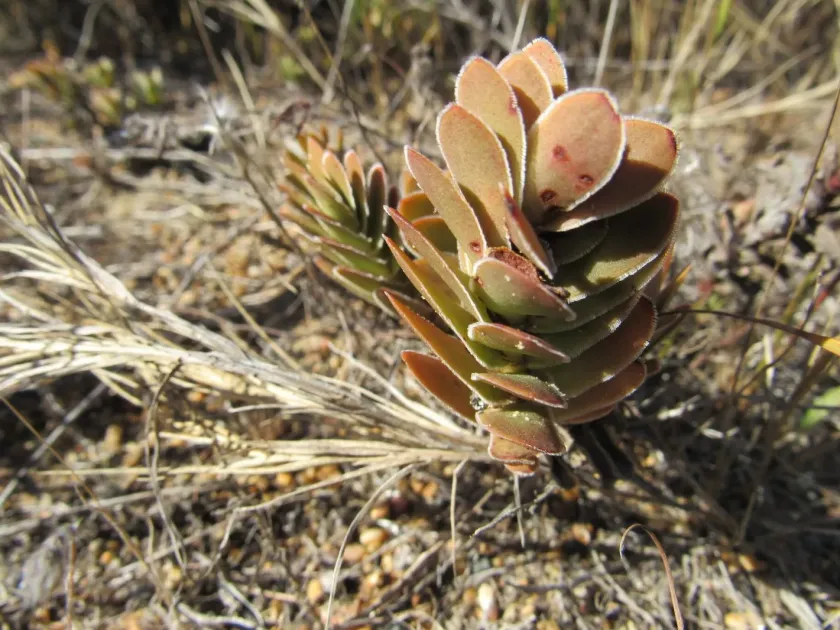
Crassula fallax is a member of the Crassulaceae family. It is a distinctive succulent native to the arid landscapes of South Africa. This plant has evolved unique morphological features to thrive in environments with irregular and scarce rainfall.
The plant demands bright, direct or filtered light to maintain its compact growth habit. Placing the plant in a position where it receives at least six hours of light daily is crucial for its health and the development of its specific leaf pigmentation.
The growing medium must be highly porous and inorganic-heavy. A mixture consisting of pumice, perlite, and coarse sand combined with a small amount of peat or coconut coir ensures that the root system remains aerated and never sits in water.
Climate requirements involve warm summers and cool, dry winters. Keeping the ambient temperature between +20 °C and +28 °C during the growing season encourages robust growth, while a winter dormant period below +15 °C is necessary to mimic natural cycles.
Irrigation must follow a strict "soak and dry" cycle. During the active growth period, water the plant thoroughly when the soil is completely dry. In winter, reduce watering significantly to prevent rot, as the plant uses stored water in its fleshy leaves.
Main diseases and pests
Root rot is the most common health issue associated with Crassula fallax, usually caused by overwatering or soil that remains damp for too long. Signs include mushy stems and yellowing of the leaves, requiring immediate repotting.
Mealybugs are frequent pests that cluster in leaf axils, sucking sap and weakening the plant. Manual removal with a cotton swab dipped in isopropyl alcohol is an effective non-toxic method for controlling minor infestations.
Spider mites can also attack the plant, especially in low-humidity environments. These tiny pests cause stippling on the leaves and eventually damage the plant's overall appearance if left untreated with appropriate miticides.
Fungal infections can occur if the environment lacks sufficient air circulation. High humidity combined with lack of airflow creates a breeding ground for spores, which can lead to unsightly spotting on the foliage.
Regular inspection is the best form of management. By checking the undersides of the leaves and the soil surface for signs of pests or decay, growers can address problems early before they compromise the structural integrity of the plant.