
Propeller Plant
Crassula falcata
Description
Sowing dates
The propagation of Crassula falcata is primarily achieved through vegetative methods, such as leaf cuttings or stem offsets. This ensures the survival of the plant and maintains its unique structural characteristics.
During the spring and summer months, healthy cuttings are removed and allowed to air-dry for several days to form a callus. This process is essential to prevent rot when the cutting is placed into a growing medium.
A well-draining, sandy substrate is used for rooting the cuttings. The medium should be kept slightly moist, as excessive humidity will lead to the decomposition of the plant tissues before root formation occurs.
While seed propagation is possible, it requires a controlled greenhouse environment with stable humidity and heat. Germination usually happens within a few weeks if conditions are perfectly maintained.
Once the young plants have developed a sufficient root system, they are transplanted into individual pots. Careful attention to light and moisture is required during the first months of their growth to prevent legginess.
Growing requirements
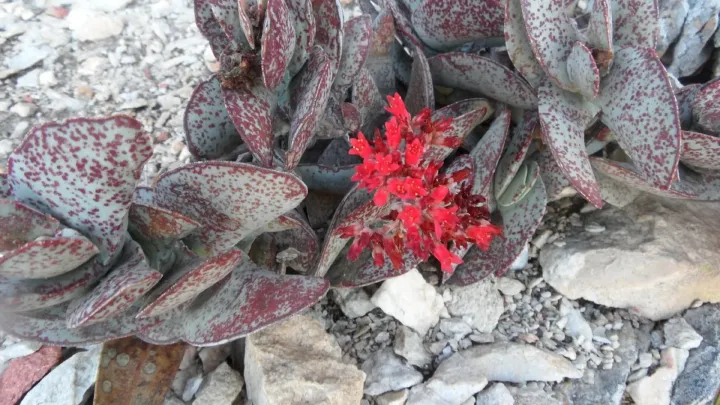
The Propeller Plant, a member of the Crassulaceae family, originates from South Africa, which dictates its specific environmental needs. It requires high levels of solar radiation to maintain its characteristic compact, sickle-shaped leaf structure.
Soil requirements are strict: the medium must provide excellent aeration and drainage. Growers typically use mixes specifically formulated for succulents, incorporating pumice, coarse sand, or perlite to avoid waterlogging.
Temperature management is critical for the long-term success of the culture. While the plant thrives in warm summer temperatures, a cool winter rest period (10–15°C) is necessary to induce the formation of its striking red inflorescences.
Watering practices must be disciplined. The "soak and dry" method is highly recommended, ensuring that the soil is entirely desiccated between irrigation events to prevent physiological distress.
- Full sun exposure for optimal growth
- Well-draining, mineral-heavy substrate
- Cool, dry winter rest period
- Limited nitrogen fertilizer application
Main diseases and pests
The most severe threats to Crassula falcata are fungal pathogens resulting from overwatering. Root rot and stem rot are the leading causes of plant mortality in domestic and greenhouse cultivation.
Pest issues include common succulent invaders like mealybugs and spider mites. These pests thrive in dry environments and can quickly infest the crevices between the dense, overlapping leaves of the plant.
Effective pest management involves the use of horticultural oils or specialized insecticides. Regular monitoring is essential, as the complex structure of the plant makes it difficult to treat once the infestation becomes widespread.
Sunburn is another concern when moving plants from low-light conditions to direct outdoor sun. A gradual acclimatization process is required to toughen the leaf epidermis against intense ultraviolet radiation.
Good ventilation and sanitary practices are the primary defense against bacterial outbreaks. Keeping the foliage dry and ensuring adequate airflow around the plant will significantly reduce the risk of infection.