
Crassula cotyledonis
Crassula cotyledonis
Description
Growing requirements
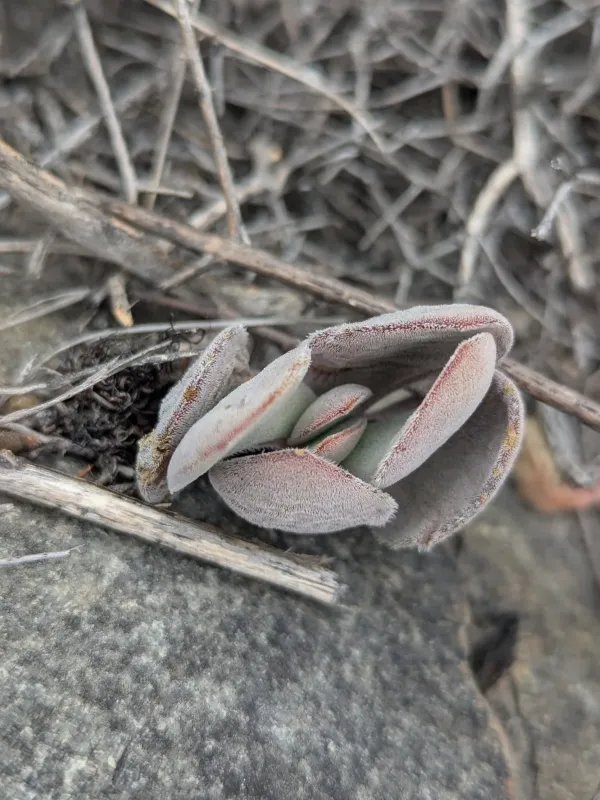
Crassula cotyledonis is a perennial succulent species belonging to the Crassulaceae family. Native to the arid landscapes of South Africa, it has evolved unique survival strategies to thrive in nutrient-poor soils and limited rainfall environments.
The plant is characterized by a compact, rosetted growth pattern with fleshy, pubescent leaves. These fine hairs are an evolutionary adaptation that helps the plant reflect excessive solar heat and mitigate moisture loss.
Successful cultivation of this species requires a highly porous, gritty substrate that ensures rapid drainage. Because the plant is highly susceptible to root rot, water retention in the soil medium must be strictly avoided.
This species demands bright, filtered sunlight to maintain its structural integrity and leaf coloration. Insufficient light levels will cause the plant to etiolate, resulting in a loss of its characteristic compact, aesthetic form.
Regarding climate, Crassula cotyledonis thrives in moderate temperatures. During the dormant winter season, providing slightly cooler temperatures and reducing irrigation significantly will help mimic the natural dry season conditions.
Main diseases and pests
The primary agricultural threat to this culture is the development of rot due to over-irrigation. Excessive moisture in the root zone quickly leads to tissue decay, which is often fatal if not diagnosed and corrected immediately.
Mealybugs are the most common pest affecting Crassula cotyledonis. They thrive in protected crevices between leaves, where they extract plant sap and weaken the overall vitality of the specimen.
Spider mites may also infest the plant if the environment becomes excessively dry and stagnant. These microscopic pests are difficult to spot initially but can cause significant leaf damage if left untreated.
Scale insects can occasionally attach themselves to the leaves, appearing as small, stationary bumps. Mechanical removal, combined with the application of horticultural oils or systemic insecticides, is recommended for control.
To prevent these threats, maintain proper spacing between individual plants to ensure adequate airflow. Keeping the foliage dry during irrigation and practicing good sanitation are the cornerstones of successful succulent management.