
Crassula barbata
Crassula barbata
Description
Growing requirements
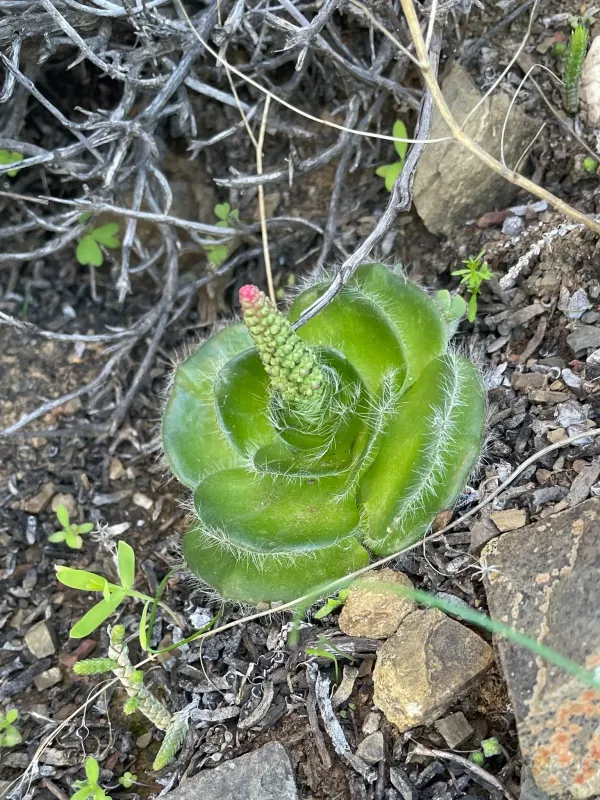
Crassula barbata is a member of the Crassulaceae family, native to the arid regions of South Africa. This miniature succulent is distinguished by its dense, basal rosette of succulent leaves. The most striking botanical feature is the presence of long white hairs along the leaf margins, which serve as a protective mechanism against intense desert sunlight.
For successful cultivation, Crassula barbata requires a climate that mimics its native habitat. It thrives in regions with low humidity and high light intensity. Indoors, it must be placed in the brightest available location, and supplemental lighting is often beneficial during the dark winter months to maintain the plant's structural integrity.
Soil requirements are strictly focused on drainage and aeration. A standard commercial potting mix is unsuitable unless heavily amended with mineral components like pumice, coarse sand, or perlite. The soil must dry out completely between irrigation events to prevent root asphyxiation and subsequent fungal decay.
Agrotechnical management revolves around the dormancy cycle. In winter, the plant requires a cool, dry period with minimal watering to initiate potential flowering. Over-fertilization should be avoided, as this species is adapted to nutrient-poor soils; a dilute balanced fertilizer applied once during the growing season is generally sufficient.
Economically, this species is prized in the horticultural trade as a specialty item for succulent enthusiasts. It is widely used in indoor ornamental design and professional plant staging due to its distinct, architectural morphology and compact size, making it an ideal candidate for limited-space gardening.
Main diseases and pests
The primary threats to Crassula barbata involve pathogens that exploit high humidity and poor ventilation. Fungal infections, particularly root rot, are the leading cause of loss. Maintaining a sterile, well-draining environment and ensuring adequate airflow around the plant are critical preventive measures.
Pest management is focused on common greenhouse insects such as mealybugs and spider mites. These pests tend to congregate in the axils of the leaves. Regular scouting and the application of appropriate contact insecticides or horticultural oils are necessary to maintain healthy specimens and ensure aesthetic quality.