
Crassula ausensis
Crassula ausensis
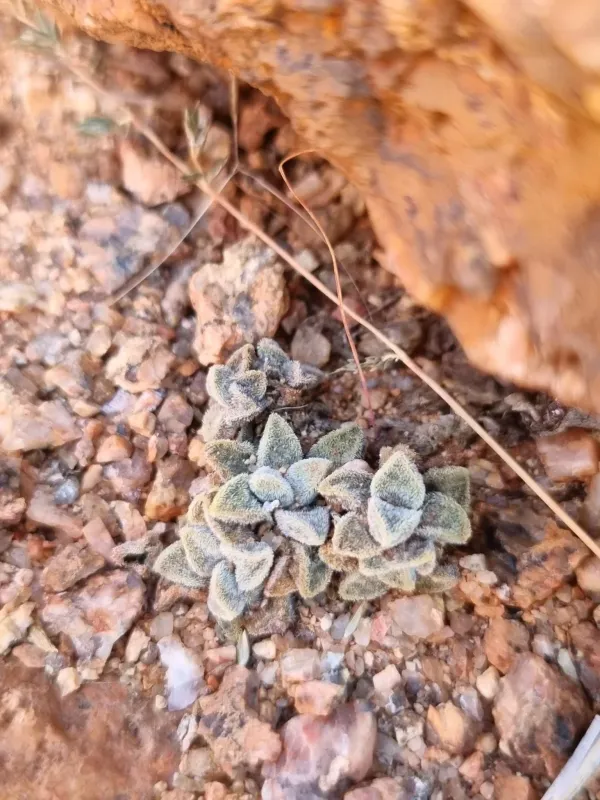
Description
Growing requirements
Crassula ausensis is a rare succulent species belonging to the Crassulaceae family. Native to the arid regions of Namibia, specifically near the town of Aus, this plant has evolved to survive in extremely harsh desert conditions.
The plant features a distinct rosette of fleshy leaves, which are often covered in fine hairs or papillae, an adaptation designed to retain moisture and survive long periods without rainfall. It is classified as a low-growing perennial species.
For successful cultivation in greenhouse or container environments, it is essential to mimic its native habitat as closely as possible. High light intensity is the most critical factor to maintain the plant's natural, compact form and color.
The substrate must have excellent drainage properties to prevent moisture accumulation. Agronomists recommend a soil mix consisting of loam, coarse sand, and small gravel, with organic matter kept below twenty percent of the total volume.
During the active growing season, temperature requirements range from 20 to 25 degrees Celsius. However, during the winter dormant period, the plant requires a cooler environment of 10 to 12 degrees to stimulate future flowering cycles.
Main diseases and pests
The primary risk when cultivating Crassula ausensis is overwatering, which rapidly leads to root and stem rot. Improper irrigation is the single most common cause of plant loss in commercial nursery operations.
Mealybugs are the most significant pest threat for this species. These insects thrive in dry environments and cause severe damage by feeding on the sap of the succulent leaves, often leading to secondary infections.
Spider mites may also appear in greenhouse conditions. Infestations are marked by tiny white dots on the leaf surface, which eventually cause significant tissue deformation and weaken the plant's overall health.
Preventive care involves strict adherence to aeration standards and moisture monitoring. Routine fungicidal treatment of the soil is recommended in greenhouse settings, especially when plants are grown in high-density configurations.
If an infestation occurs, systemic insecticides or acaricides are suggested, but due to the plant's sensitivity to chemicals, concentrations should be halved compared to standard application rates to avoid phytotoxicity.