
Crassula atropurpurea
Crassula atropurpurea
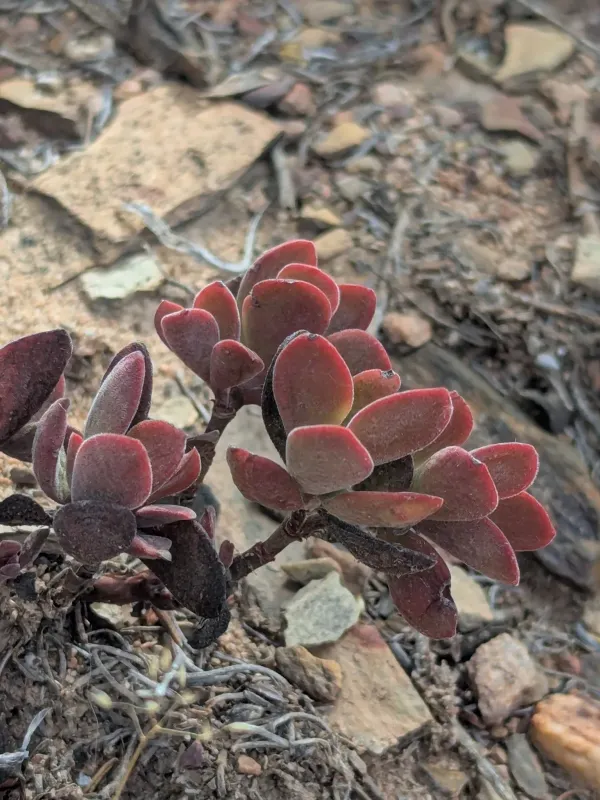
Description
Growing requirements
Crassula atropurpurea is a notable succulent belonging to the Crassulaceae family. Native to the arid regions of Southern Africa, it has evolved to thrive in environments with low rainfall, utilizing its fleshy leaves to store water efficiently for extended periods.
Botanically, the species is defined by its compact structure and succulent leaves that display a remarkable purple or deep bronze coloration when exposed to high intensity of direct sunlight. This aesthetic feature makes it highly valued in specialized greenhouse production.
The cultivation requirements are centered around the need for excellent drainage. A gritty, mineral-based soil mix, such as a combination of potting soil with added perlite and coarse sand, is essential for maintaining the health of the plant's root system.
As a light-loving species, it requires at least several hours of direct sun daily to maintain its structural integrity and its characteristic pigmentation. Lack of light results in etiolation, where the stems become weak and leggy, losing their deep colors.
Regarding climate, Crassula atropurpurea prefers dry and warm conditions. During the winter season, it is critical to provide a cool, dry environment with temperatures around 10–12 degrees Celsius to facilitate a dormant state, which is necessary for future growth.
Main diseases and pests
The primary threat to this crop is the incidence of fungal and bacterial rots caused by overwatering. If the substrate remains moist for too long, the delicate root system quickly succumbs to decay, which is often fatal to the plant.
Insect pests such as mealybugs represent a common challenge. These small pests colonize the crevices between leaves and stems, sucking the plant's sap and weakening its vigor, often leaving behind a waxy substance that promotes secondary fungal growth.
Spider mites can also become a problem, particularly in dry and poorly ventilated indoor environments. Their feeding activity causes small, discolored spots on the leaves, which can lead to overall plant decline if left unchecked.
Improper sanitation in the greenhouse can facilitate the spread of diseases. It is essential to remove any dead or dying leaves promptly to prevent the development of mold or pathogens that can infect the rest of the plant.
Integrated pest management, including regular inspection and the use of targeted biological or chemical treatments when necessary, ensures the crop remains healthy and maintains its ornamental appeal throughout the growing season.