
Cotyledon woodii
Cotyledon woodii
Description
Growing requirements
Cotyledon woodii is a succulent perennial species belonging to the Crassulaceae family. Native to the arid landscapes of South Africa, this plant has evolved to thrive in rocky, well-draining soils with minimal water availability, making it highly resilient to drought.
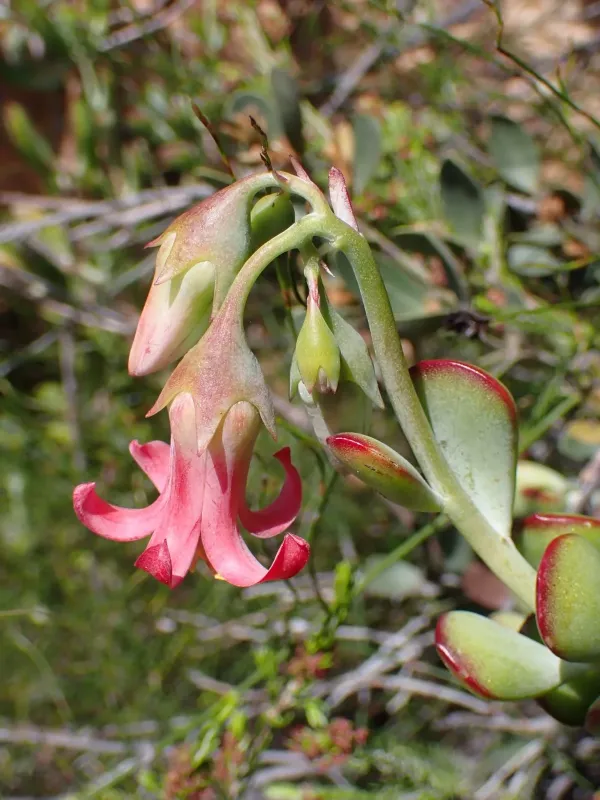
The botanical structure of the plant features succulent, opposite leaves often coated with a glaucous waxy layer, which acts as a protective shield against harsh sun exposure. Over time, the stems lignify, causing the plant to adopt a sturdy, shrub-like habit that can reach significant maturity.
Successful cultivation requires high light intensity, ideally direct sunlight for several hours a day to prevent etiolation. In environments where light is insufficient, the plant tends to stretch, losing its characteristic compact form and architectural appeal.
The substrate must prioritize drainage above all else. A professional mix for this species typically includes coarse horticultural sand, grit, and perlite, ensuring that oxygen can reach the roots and excess water drains away instantly to avoid stagnation.
Agricultural management relies on a strict wet-dry cycle. Watering should only occur when the soil is completely desiccated. During the winter dormancy phase, the plant requires cool temperatures and drastically reduced moisture to stimulate its natural blooming cycle in the spring.
Main diseases and pests
Root rot is the primary physiological threat to Cotyledon woodii, usually caused by overwatering or poor drainage systems. This fungal-based condition manifests through leaf discoloration and soft, mushy stem tissue, which requires immediate surgical intervention and repotting.
Mealybugs are the most common pests encountered in cultivation. These insects thrive in the protected crevices of the foliage, depleting the plant's nutrient reserves. They can be identified by the white, cotton-like masses they leave behind on the succulent leaves.
Spider mites can also become problematic if the surrounding humidity remains consistently too low for extended periods. Their presence is indicated by fine webbing and stippling on the leaves, which can eventually lead to the destruction of the plant's protective epidermis.
Integrated pest management involves physical removal of insects using swabs dipped in isopropyl alcohol for minor infestations. For more severe cases, systemic insecticides registered for succulents should be utilized according to the manufacturer's specific instructions.
Maintaining a clean, well-ventilated growing environment is the best prevention strategy. Ensuring that no water pools in the rosette structure during irrigation significantly reduces the risk of bacterial and fungal pathogens attacking the plant's vulnerable crown.