
Cotyledon hybrids
Cotyledon hybrids
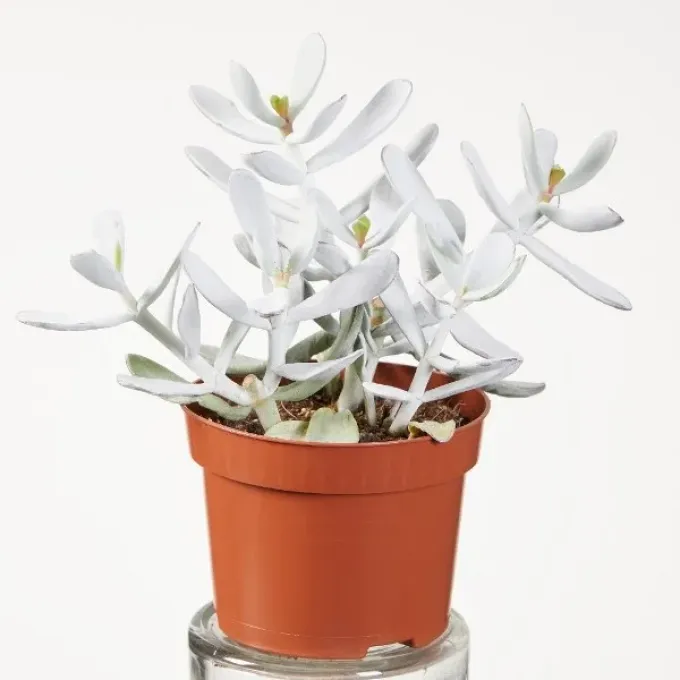
Description
Growing requirements
Cotyledon hybrids belong to the Crassulaceae family. These plants are popular cultivars derived from species native to the arid regions of Southern Africa, highly valued in commercial floriculture for their unique leaf structure and drought resistance.
These hybrids require bright, direct sunlight to thrive and maintain their aesthetic appeal. In greenhouse settings, supplemental lighting may be necessary during winter months to prevent elongation and maintain plant density.
Temperature management is critical: these plants perform best in environments ranging from 20 to 25 degrees Celsius during the growing season. A cooler dormant period is essential for successful annual development cycles.
The growing medium must be porous and well-draining. A mix of pumice, coarse sand, and a minimal amount of peat-free substrate is recommended to facilitate rapid water drainage and root oxygenation.
Watering frequency should be governed by the drying rate of the substrate. Irrigation should be suspended during the winter dormant phase, except for slight moisture to prevent excessive root desiccation.
Main diseases and pests
The primary agronomic threats to Cotyledon hybrids are fungal pathogens resulting from over-irrigation. Root rot and stem rot can spread rapidly in humid, stagnant conditions, leading to plant loss.
Common pests include mealybugs, which tend to congregate in leaf axils and on the undersides of leaves, and spider mites, which can cause significant damage in dry, hot greenhouse environments.
Preventive measures include maintaining proper air circulation through forced ventilation and avoiding wetting the foliage during irrigation to protect the plant's natural waxy protective coating.
Regular monitoring for early signs of infection, such as leaf discoloration or a loss of turgor, is vital for maintaining high quality and marketability of the nursery stock.
Integrated pest management protocols, including the targeted use of systemic insecticides and miticides, are recommended to maintain plant health while minimizing environmental impact.