
Cotyledon cuneata
Cotyledon cuneata
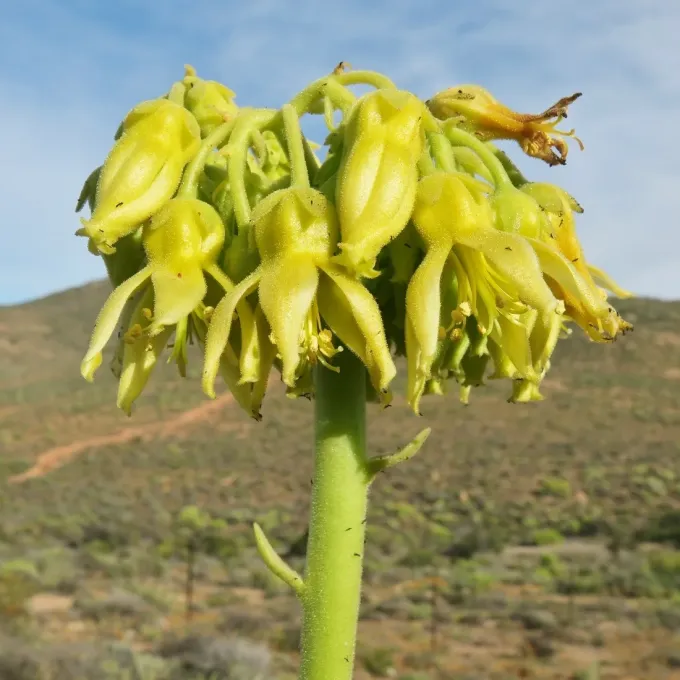
Description
Sowing dates
Propagation of Cotyledon cuneata in agricultural practice is effectively achieved through both seed sowing and vegetative methods.
Seeds are sown in the spring season, requiring stable temperatures between 20 and 22 degrees Celsius to ensure high germination rates.
The substrate for germination should be a light, well-draining mixture consisting primarily of sand and peat to prevent seedling decay.
Vegetative propagation using stem cuttings is a common practice that allows for the rapid development of new, healthy plants.
Cuttings must be allowed to callus for a few days in a dry environment before being placed in slightly moist growing medium.
Growing requirements
Cotyledon cuneata belongs to the Crassulaceae family and is a specialized succulent adapted to arid environments.
The culture thrives in bright, diffused light, as direct and intense sunlight can cause significant foliage damage or burning.
Soil requirements involve a porous, mineral-rich substrate with excellent drainage properties to prevent any stagnant water accumulation.
Optimal growth occurs at temperatures ranging from 20 to 25 degrees Celsius, while a cool rest period is needed during winter months.
Watering must be strictly regulated, ensuring that the soil medium dries out completely between irrigation cycles to maintain root health.
Main diseases and pests
Excessive moisture is the primary threat to the crop, as it quickly leads to root rot and systemic fungal infections.
Pests such as mealybugs and spider mites frequently target the fleshy leaves, sucking nutrients and weakening the plant.
The application of systemic insecticides is recommended when pest populations exceed acceptable thresholds in a cultivation setting.
Poor ventilation and high humidity significantly increase the risk of fungal diseases, making regular airflow essential.
Routine inspection of the plant's health and the immediate removal of affected tissues are vital for effective disease management.
Harvesting
Harvesting propagation material or pruning for ornamental purposes is typically performed during the active growth phase.
Pruning techniques are utilized to manage plant size and improve the overall structural integrity of the succulent stems.
Only healthy, pest-free stems should be selected for propagation to ensure the continued vigor of the cultivated stock.
Tools used during the pruning process must be sharp and sterilized to prevent the transmission of pathogens between plants.
Proper storage of seeds requires a cool, dry, and dark environment to maintain viability for future cultivation cycles.