
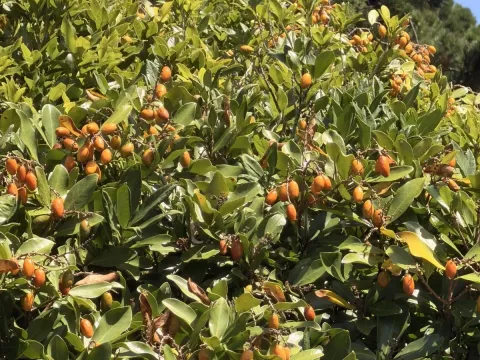
Corynocarpus
Corynocarpus J.R. et G. Forst.
Corynocarpus is a genus of evergreen trees and shrubs belonging to the Corynocarpaceae family, which is widely recognized in the temperate and subtropical regions of the Southern Hemisphere.
What the section contains

Corynocarpus
The plant thrives best in nutrient-rich, well-draining soils with a neutral or slightly acidic chemical balance, which promotes healthy root development.
Regarding climate, Corynocarpus prefers maritime conditions where temperatures are stable and frost-free, as the plant is sensitive to freezing and cold winds.
Adequate moisture is essential during the growing season; however, irrigation practices must prevent waterlogging to avoid physiological stress in the root zone.
In terms of light, the species is highly adaptable, showing good tolerance to partial shade while developing a more compact and glossy foliage structure under full sun.
The primary agricultural and horticultural value of Corynocarpus lies in its application for ornamental purposes, such as hedging and coastal landscape design.
Historically, the fruit of the most common species was harvested for consumption, but it requires intensive detoxification processes to remove harmful glycosides like karakin.
For ornamental nursery production, harvesting involves collecting mature seeds during the late fruiting stage, characterized by a bright orange pericarp color.
The seeds must be processed promptly after harvest to maintain their viability, as they do not possess a long shelf-life when stored in improper conditions.
Modern nursery management focuses on propagating the plant through vegetative cuttings or seed starting to provide high-quality ornamental stock for gardening markets.
The main pathological threats to Corynocarpus include fungal root rots, which usually occur if the growing medium lacks adequate aeration and drainage.
Pests such as mealybugs and scale insects are known to attack the plant, particularly under greenhouse conditions where they settle on the stems and leaf undersides.
Sooty mold often develops as a consequence of honeydew-producing insect infestations, which can diminish the aesthetic value of the plant by covering leaves in dark layers.
Integrated pest management strategies involve monitoring for early signs of infestation and applying horticultural oils or systemic insecticides where necessary.
Pruning is recommended as a preventive measure to maintain airflow through the canopy, reducing the likelihood of fungal outbreaks and promoting overall plant vigor.