
Cyanotis barbata
Cyanotis barbata
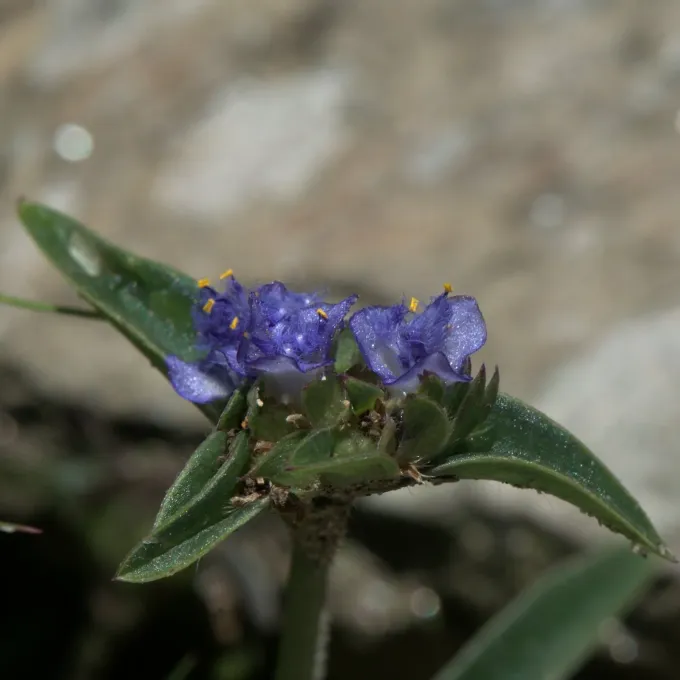
Description
Growing requirements
Cyanotis barbata is a perennial herbaceous plant belonging to the Commelinaceae family. Native to tropical and subtropical regions of Asia, specifically India, this species is well-adapted to rocky habitats and well-drained soils, often found in high-altitude meadows.
The plant is characterized by its distinctively hairy leaves and stems, which give it a soft, textured appearance. It grows in a rosette or trailing form, making it an excellent candidate for decorative cultivation in hanging baskets or rock garden borders in suitable climates.
Regarding environmental needs, Cyanotis barbata requires bright, indirect light to thrive. While it can tolerate some morning sun, exposure to intense midday sun should be avoided to prevent leaf scorch and damage to the delicate hairs covering the foliage.
The ideal soil for this plant should be well-draining and slightly acidic. A mix of peat moss, perlite, and coarse sand is recommended to maintain the necessary aeration for the root system, preventing the suffocation of roots often seen in heavier clay-based soils.
Temperature management is crucial during the dormancy phase. The plant prefers temperatures around 20-25°C during the growing season but requires a cooler, drier environment (around 14-16°C) in winter to promote future blooming and overall plant vigor.
Main diseases and pests
The primary threat to the health of Cyanotis barbata is root rot, primarily caused by overwatering or poor drainage. Ensuring that the pot has adequate drainage holes and allowing the soil to dry out between watering sessions are the most effective preventive steps.
Spider mites are a common pest problem, especially in dry, indoor environments. They tend to weave fine webs between the hairy leaves, which can be difficult to notice at first. Regular misting and maintaining optimal humidity levels help deter mite infestations.
Mealybugs can also pose a risk, hiding in the leaf axils. If detected, manual removal with a cotton swab dipped in isopropyl alcohol is recommended for small infestations, while systemic insecticides should be used for larger, more persistent outbreaks.
Fungal issues like powdery mildew may occur if air circulation is poor. Improving ventilation around the plants and avoiding overhead watering can significantly reduce the risk of such fungal diseases appearing on the foliage.
To keep the plant healthy over multiple years, it is advisable to prune back leggy stems after the flowering period. This encourages bushier growth and helps to keep the plant rejuvenated, preventing it from becoming sparse as it ages.