
Psammophora
Psammophora
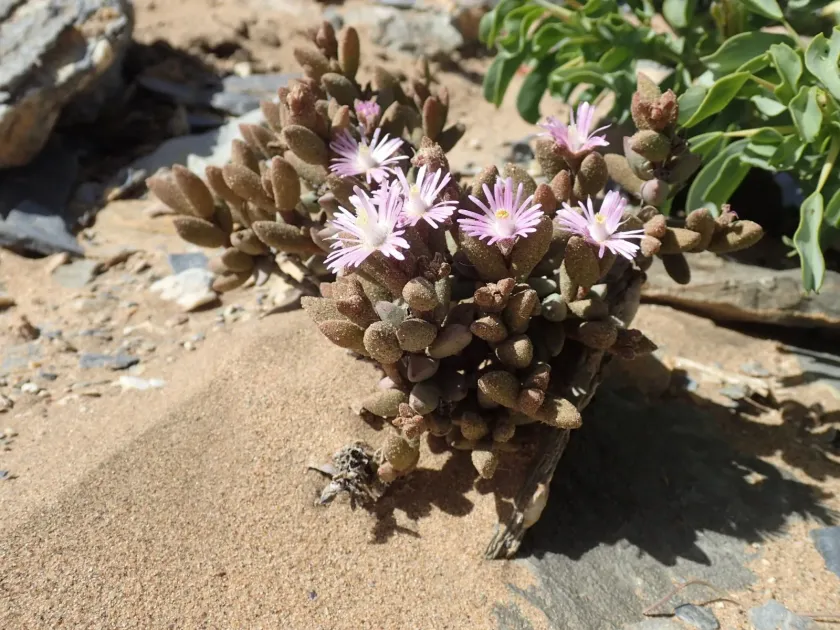
Description
Growing requirements
Psammophora is a genus of small, slow-growing succulent plants belonging to the family Aizoaceae. These plants are native to the arid desert landscapes of Southern Africa, where they have evolved to thrive in nutrient-poor, sandy soils under harsh environmental conditions.
The botanical name Psammophora translates to "sand-bearer," referring to the sticky leaf surfaces that collect sand and debris. This natural adaptation serves as a form of camouflage against herbivores and provides a physical barrier against intense desert heat and UV radiation.
Successful cultivation requires mimicry of their natural desert environment. Growers must prioritize excellent drainage, using a substrate composed of inorganic materials such as pumice, coarse sand, and perlite. The absence of organic matter in the potting mix is crucial to prevent root rot.
Temperature and light requirements are equally demanding. Psammophora species require high levels of solar exposure to maintain their compact structure. During the winter dormancy period, temperatures should be lowered, and water should be withheld entirely to allow the plant to rest.
Proper water management is the most critical aspect of maintenance. Watering should only occur during the growth phase, and the soil must dry out completely between sessions. Excessive humidity or stagnant water is the primary threat to the plant's health, often leading to rapid tissue decay.