
Mesembryanthemum digitatum
Mesembryanthemum digitatum
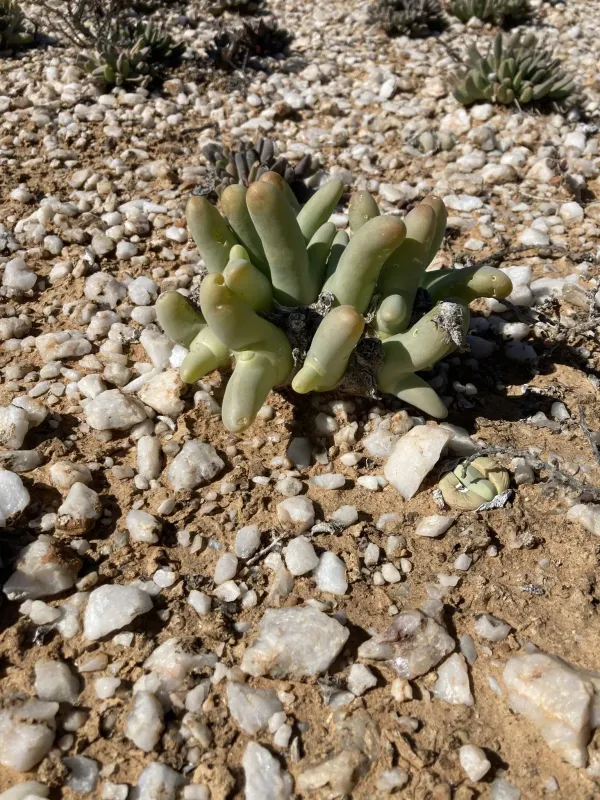
Description
Sowing dates
Mesembryanthemum digitatum is a specialized succulent species belonging to the Aizoaceae family. Cultivation starts with seeds, which require specific conditions to germinate successfully, typically in a controlled environment or greenhouse setting.
The sowing process should be initiated in late winter or early spring. A high-quality, sandy substrate is essential to ensure proper drainage, as these seeds are sensitive to moisture imbalances during the critical early development phase.
Temperature control is paramount for germination, with an ideal range of 20–25 degrees Celsius. Seeds should be sown on the surface and barely covered with a fine layer of inert mineral material, such as perlite or coarse sand, to facilitate light exposure.
Seedlings need plenty of bright, indirect light immediately after emergence to prevent stretching. Pricking out should be done cautiously once the first true leaves are fully developed to ensure the young plants gain enough strength to be transplanted.
Consistent care in the early stages, including monitoring moisture levels and avoiding overwatering, is crucial. As the plants mature, they will develop the characteristic fleshy, finger-like leaves that define the species.
Growing requirements
Native to arid regions of South Africa, this species thrives under conditions of high solar radiation. Full sun exposure is necessary to maintain the compact, typical growth form and ensure the plant's health throughout the year.
The soil requirement is stringent: the medium must be highly porous and low in organic nutrients. A gritty, mineral-based soil mix ensures that the roots do not sit in damp conditions, which is the most common cause of failure in cultivation.
Irrigation practices must strictly follow a cycle of wetting and complete drying. This mimics the plant's natural habitat, where rainfall is infrequent. Overwatering is highly detrimental and should be avoided at all costs during the active growing season.
Temperature management involves warm summer days for growth and a cooler, dry rest period during winter. This dormant period is essential for the metabolic reset of the plant, helping it survive and bloom effectively when conditions improve.
Adequate ventilation is necessary to ensure the health of the plant surface. Good air circulation helps prevent the accumulation of moisture on the leaves and reduces the risk of pathogens associated with stagnant, humid air.
Main diseases and pests
The primary threat to the stability of Mesembryanthemum digitatum is root rot. This physiological collapse is almost always linked to poor drainage or overly frequent watering, leading to the rapid decay of the plant's root system.
Insects, such as the spider mite, are common pests that target these succulents. They feed on the sap of the leaves, resulting in unsightly spots and reduced vigor, which can eventually kill the plant if left unmanaged.
Mealybugs are another prevalent threat, often nesting in the crevices of the finger-like leaves. Manual removal or the application of appropriate contact insecticides is recommended to keep infestations under control.
Fungal issues may arise if humidity levels remain too high for extended periods. Maintaining a dry environment and ensuring the soil dries out between waterings are the best preventive strategies against most biological threats.
- Root rot caused by excessive soil moisture.
- Infestation by spider mites in dry conditions.
- Mealybug colonization within leaf structures.