
Mesembryanthemum coriarium
Mesembryanthemum coriarium
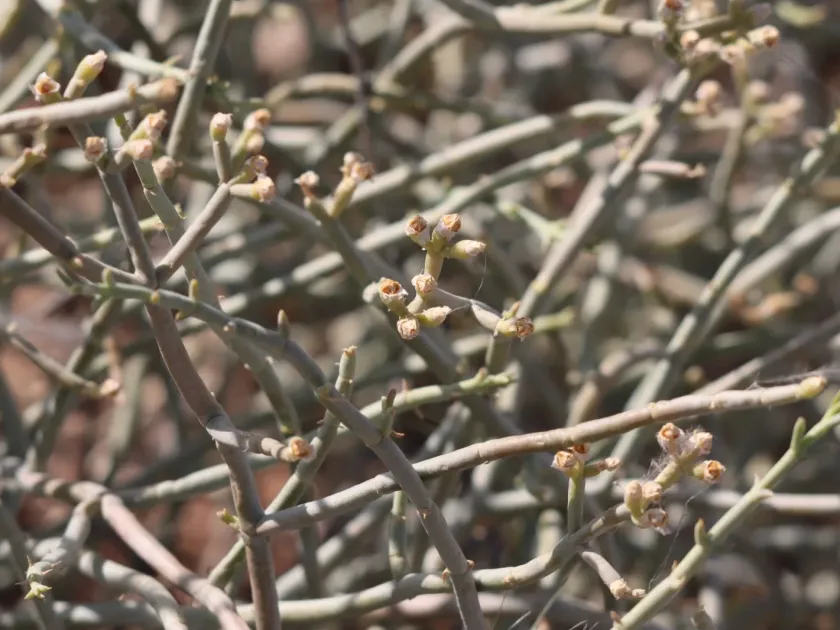
Description
Sowing dates
Mesembryanthemum coriarium belongs to the Aizoaceae family and is a succulent plant native to arid regions, primarily adapted to harsh desert environments.
Sowing should be initiated in the early spring period, ensuring the ambient soil temperature is maintained at a consistent level of 20 to 25 degrees Celsius.
The seeds are notably small, requiring surface sowing practices where they are merely pressed into the substrate rather than deeply buried.
Consistent moisture management is required during the germination phase to ensure successful establishment, avoiding excessive water saturation.
Transplanting or thinning operations are scheduled once the seedlings have developed two sets of true leaves to ensure optimal growth spacing.
Growing requirements
This crop demands high levels of solar exposure throughout the day, requiring planting sites that receive full, direct sunlight without interference.
Soil composition must prioritize drainage, utilizing sandy or gravelly textures to prevent root rot caused by stagnant water conditions.
The species demonstrates notable tolerance to saline soil profiles, making it a viable option for agricultural use in challenging arid regions.
Optimal temperature ranges for active growth are between 15 and 30 degrees Celsius, with the plant showing resilience to high-temperature fluctuations.
Agrotechnical maintenance focuses on minimal irrigation cycles, allowing the substrate to dry out significantly between individual watering events.
Harvesting
The harvesting process targets the peak growth phase, ensuring the succulent tissue maintains its intended structural and chemical integrity.
Mechanical harvesting equipment is employed in large-scale operations to cut the biomass effectively while maintaining a controlled stubble height.
Drying procedures must be executed promptly after collection in ventilated facilities to inhibit microbial activity and preserve the plant's quality.
Storage of the processed harvest requires dry conditions to prevent moisture absorption and degradation of the succulent organic matter.
Efficient yield management is achieved through precise timing of the harvest, preventing woody fiber accumulation in the plant tissues.