
Mesembryanthemum aitonis
Mesembryanthemum aitonis
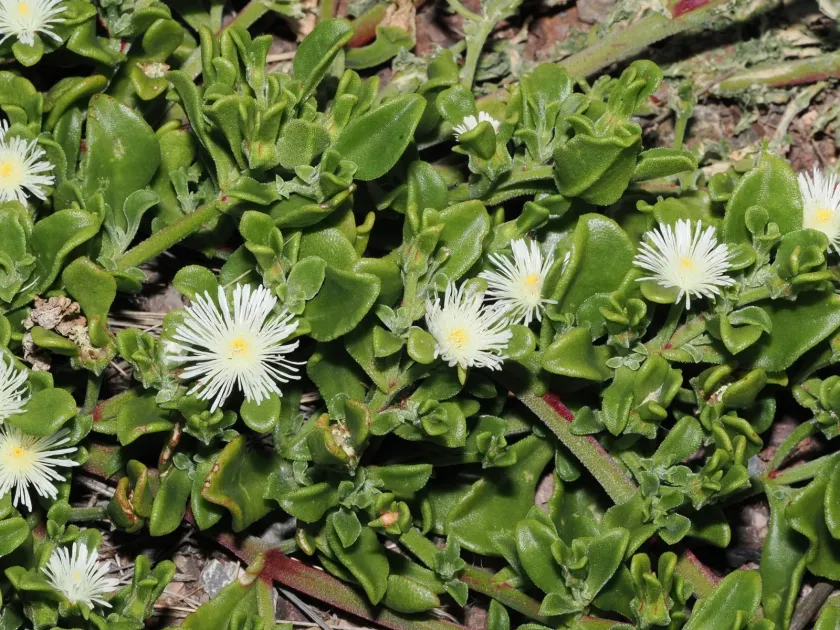
Description
Sowing dates
Mesembryanthemum aitonis is a succulent plant belonging to the Aizoaceae family, naturally adapted to the arid environments of Southern Africa. Sowing typically aligns with the onset of seasonal moisture to ensure successful germination.
In cultivation, seeds are sown in a well-draining, sandy, and porous substrate. It is crucial not to bury the seeds too deep, as they require sufficient light exposure for the germination process to begin.
The optimal temperature range for seed development is between 20 and 25 degrees Celsius. Providing a warm and stable environment is key to achieving a uniform seedling emergence.
As the seedlings develop, they should be gradually spaced out to allow for healthy air circulation around the plants, reducing the risk of damping-off diseases.
Cultivators often treat this species as an annual in cooler climates, starting seeds in early spring in greenhouses before hardening off and planting outdoors when frost risks have passed.
Growing requirements
This crop is highly heliophilous, requiring full sun exposure for the majority of the day to maintain its compact growth form and promote flowering.
Soil requirements focus on excellent drainage properties. Mesembryanthemum aitonis performs best in poor, sandy, or rocky soils, as they prevent the risk of waterlogging.
The plant exhibits remarkable tolerance to saline conditions, making it an interesting candidate for cultivation on marginal lands where other crops might struggle.
Watering must be strictly managed; the soil should be allowed to dry out completely between sessions to mimic the natural cycles of its habitat and prevent root stress.
Atmospheric humidity should remain low, as high moisture levels in the air can lead to leaf rot and attract secondary pathogens, especially during cool nights.
Main diseases and pests
Fungal pathogens represent the most significant threat to the health of Mesembryanthemum aitonis, primarily triggered by excessive moisture and poor air drainage.
Root rot is a common physiological and pathological issue that occurs when the substrate remains saturated for too long, leading to the rapid decay of succulent tissues.
Insects such as mealybugs and spider mites may infest the plant, particularly in greenhouse conditions where natural predators are absent and conditions remain dry and warm.
Gastropods, including snails and slugs, are frequent pests during the early stages of plant growth, as they are attracted to the high water content of the leaves.
Effective management includes maintaining a dry environment around the base of the plant, removing debris from the soil surface, and applying appropriate pest control measures only when necessary.