
Aptenia
Aptenia
Description
Growing requirements
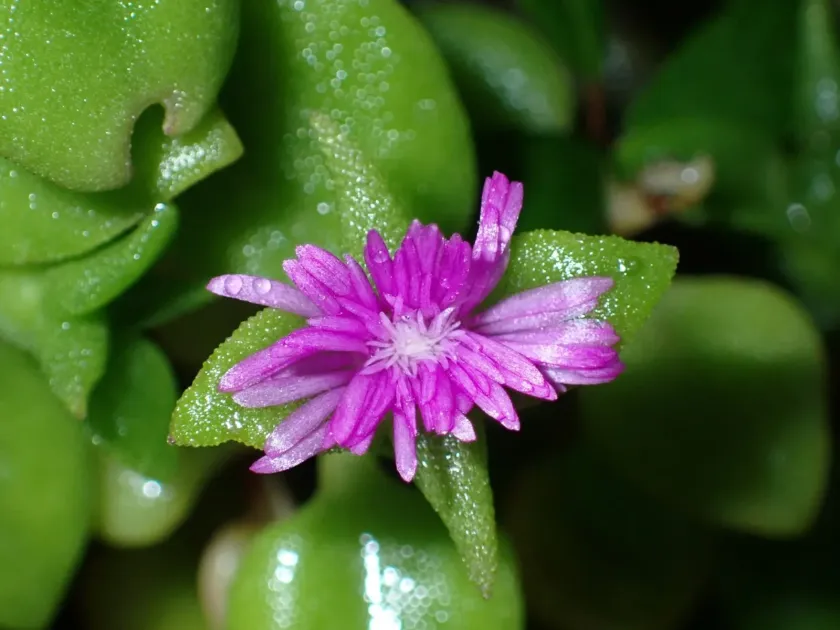
Aptenia (Aptenia) is a perennial succulent subshrub belonging to the Aizoaceae family. Native to the arid regions of Southern Africa, it is widely valued for its succulent foliage and vibrant, daisy-like flowers that appear during the growing season.
The plant thrives in bright, direct sunlight. In an indoor setting, placing the plant on a sunny windowsill is essential, as inadequate light will cause the stems to become leggy and the foliage to lose its deep green luster and compact habit.
Regarding soil requirements, Aptenia demands well-draining media. A standard succulent or cactus mix, amended with pumice or perlite, provides the necessary porosity to prevent water stagnation around the fibrous root system.
Temperature management is critical for optimal growth, with an ideal range of 20 to 25 degrees Celsius. During the dormant winter season, the plant benefits from cooler temperatures, which helps stimulate flower production in the following spring.
Watering frequency should be adjusted based on the season. During the active growth phase, allow the substrate to dry out between waterings. In winter, the plant enters a period of dormancy, requiring very sparse hydration to keep the tissues from shriveling.
Main diseases and pests
Aptenia is susceptible to common houseplant pests, primarily mealybugs and spider mites. These pests thrive in dry conditions and can cause significant damage to the succulent leaves by sucking plant sap and weakening the overall structure.
Root rot is the most serious threat to this culture, usually induced by poor drainage or excessive watering. Once the roots are compromised, the decay can quickly spread to the stems, making it difficult to salvage the plant.
To combat pests, growers should utilize horticultural oils or systemic insecticides. Consistent monitoring of the underside of the leaves and the stem crevices is recommended to detect infestations at the earliest possible stage.
Preventative care for disease involves ensuring the pot has adequate drainage holes and avoiding the use of water-retentive peat-heavy soils. If root rot is suspected, immediate repotting into dry, fresh soil is necessary to stop the spread.
Environmental control is the best defense against threats. Maintaining proper air circulation around the plants significantly reduces the risk of fungal infections and creates an unfavorable environment for typical indoor pests.