
Agastache hybrid
hybrids between Agastache foeniculum (Pursh) Kuntze and Agastache rugosa (Fisch. & C. A. Mey) Kuntze
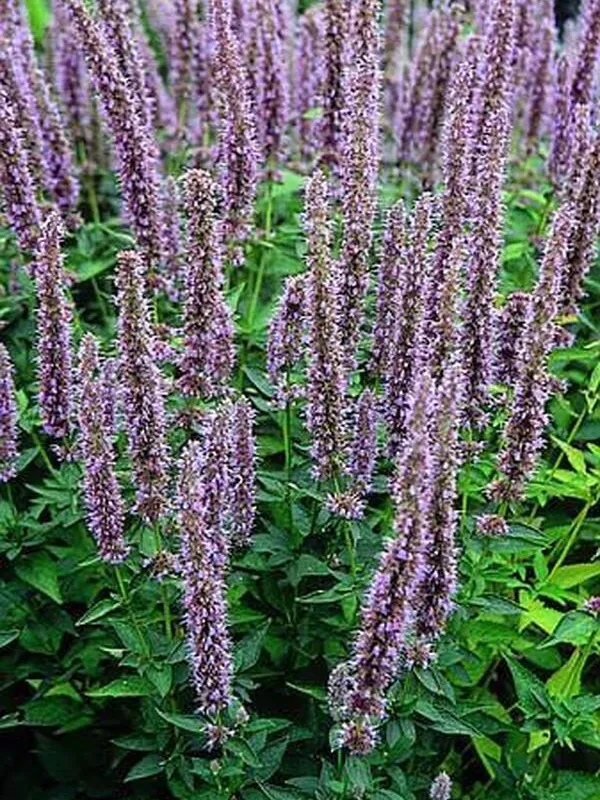
Description
Sowing dates
Sowing Agastache hybrid seeds usually begins in late winter or early spring in a greenhouse to ensure a strong root system before transplantation.
The seeds are tiny and require light for germination, so they should be sown on the surface of the growing medium without covering them.
Using a high-quality, peat-based seed starting mix helps maintain consistent moisture levels which is critical for uniform germination.
Once seedlings have developed at least two pairs of true leaves, they can be transplanted into larger pots to encourage vigorous growth.
Direct field sowing is possible in warmer climates, provided that the soil is finely tilled and weed pressure is effectively managed during emergence.
Growing requirements
Agastache hybrid, a member of the Lamiaceae family, is a cross between Agastache foeniculum and Agastache rugosa.
This crop thrives in full sun exposure, which is essential for maximizing the concentration of aromatic compounds in its foliage and flowers.
It prefers well-drained, fertile soil and cannot tolerate waterlogged conditions, which can lead to rapid root decay during the growing season.
The plant demonstrates excellent drought tolerance once established, making it a sustainable choice for integrated farm management systems.
It is widely valued as an exceptional honey plant, attracting a large number of pollinators and beneficial insects to agricultural landscapes.
Main diseases and pests
Fungal diseases such as root rot represent the primary threat to the crop, especially when grown in soils with poor drainage properties.
Powdery mildew can infect foliage during periods of high humidity and poor air circulation, reducing the overall quality of the harvest.
Aphids and spider mites are common pests that tend to cluster on the underside of leaves and along the succulent growth of the flower spikes.
Implementing a proper rotation schedule and spacing the plants adequately are vital steps to reduce the incidence of these biological threats.
Monitoring the fields for early signs of infection is necessary to intervene quickly and avoid the need for intensive chemical treatments.
Harvesting
The optimal harvest timing occurs during full bloom, as this is when the essential oil profile is most robust and biologically active.
Harvesting involves cutting the aerial parts of the plant, often leaving a portion of the stem to promote regrowth for future cuttings.
Post-harvest processing requires immediate drying in shaded, well-ventilated areas to prevent the degradation of volatile aromatic compounds.
Mechanical harvesting equipment is typically utilized in larger commercial fields to improve efficiency and reduce the overall labor costs.
Properly cured and dried Agastache retains a complex aroma reminiscent of anise, mint, and licorice, which is highly sought after by producers.