
Agastache rugosa
Agastache rugosa (Fisch. & C. A. Mey) Kuntze
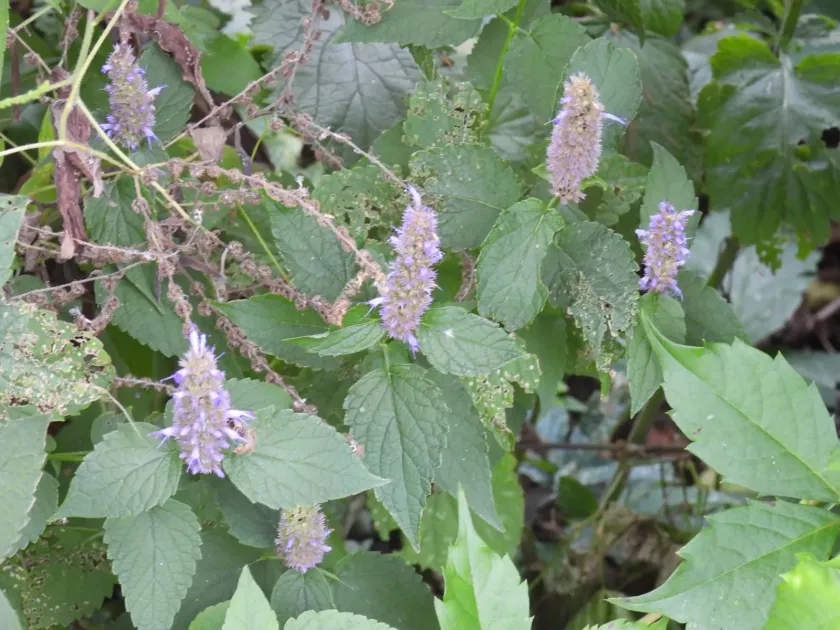
Description
Sowing dates
Sowing of Agastache rugosa should be initiated in the spring when soil temperatures consistently reach at least 10–12 degrees Celsius. Optimal results are achieved by planting from late April to early May, allowing the seedlings to establish before summer heat sets in.
For more uniform establishment and early product yield, the greenhouse seedling method is highly recommended. Seeds should be sown into trays in March, ensuring exposure to bright light and moderate moisture to facilitate consistent germination.
As the seeds are extremely small, they should be sown on the surface and only lightly covered with a thin layer of sand or vermiculite. Deep planting often results in poor germination rates and stunted early development of the young plants.
In direct-seeding scenarios, rows should be spaced 45–60 centimeters apart to accommodate the wide root systems and lateral branching of mature plants. This spacing also simplifies weed control and maintenance throughout the growing season.
Once seedlings emerge, thinning is required to maintain a density of 20–30 centimeters between plants within the row. Proper thinning is crucial for providing adequate airflow, which is essential to prevent disease pressure in humid climates.
Growing requirements
Agastache rugosa is a member of the Lamiaceae family that thrives in full sun exposure. While it can tolerate light partial shade, insufficient light intensity will lead to leggy growth and significantly reduced essential oil production.
The crop prefers well-drained, fertile soil with a neutral pH. It is highly intolerant of waterlogged conditions, which can lead to rapid root decay; thus, selecting a site with proper drainage or building raised beds is highly beneficial.
This species shows moderate winter hardiness. In regions with harsh, snowless winters, applying organic mulch around the base of the plant is recommended to protect the root crowns and ensure vigorous regeneration in the following spring.
Regular irrigation is vital during the peak growing season, particularly during the stages of bud formation and flowering. However, once the plant is well-established, it demonstrates a degree of drought tolerance, allowing it to withstand dry spells.
Soil fertility management should focus on organic amendments incorporated before planting. Over-fertilization with nitrogen should be avoided, as it promotes excessive vegetative growth and decreases the concentration of aromatic compounds in the foliage.
Yield
The yield of dried biomass for Agastache rugosa generally ranges between 20 to 35 centners per hectare under professional management. The harvest primarily targets the aerial parts, including the fragrant leaves and elongated spikes.
Productivity typically peaks during the second and third years after initial planting. During these years, the plants develop large, bushy architectures with a high number of secondary and tertiary flowering stems, maximizing the output.
Essential oil yields are variable but typically account for 0.5% to 1.2% of dry matter, characterized by a distinct anise-like scent. This oil profile makes the crop valuable for the pharmaceutical and food flavor industries.
Implementing regular mechanical inter-row cultivation helps maintain soil aeration, which is critical for root health and overall plant vigor. In warmer climates, managed plantations can support up to two distinct harvests per season.
The commercial lifespan of a plantation is approximately 4 to 5 years. By providing consistent care and avoiding over-harvesting, growers can maintain high-quality production levels throughout this entire multi-year period.
Main diseases and pests
The primary threats to Agastache rugosa are fungal infections, particularly powdery mildew and root rot, which thrive in high humidity or stagnant air conditions. Preventing excessive moisture accumulation on the foliage is key to control.
Pests such as aphids and spider mites can occasionally affect plantations by feeding on young leaf tissue. Infestations lead to foliage deformation, which reduces both the ornamental value and the chemical quality of the harvested medicinal product.
Good cultural practices, including crop rotation and maintaining adequate spacing, are the best methods for minimizing disease. These practices improve airflow, effectively drying the plants after rainfall or irrigation events.
If pest populations reach damaging levels, biological controls are preferred over synthetic pesticides to preserve the herbal quality. Monitoring is essential for early detection, allowing for spot-treatments rather than widespread chemical application.
Infections should be managed by promptly removing and destroying compromised plants. Strict field sanitation helps break the lifecycle of common pathogens, ensuring the long-term health of the entire crop batch.
Harvesting
Harvesting is ideally conducted during the full bloom phase when the concentration of essential oils is at its peak. This timing ensures the strongest possible scent profile and the highest concentration of bio-active constituents.
The stems should be cut 10–15 centimeters above the soil surface. This height is sufficient to protect the basal buds, which are essential for the plant to re-sprout and successfully survive until the next harvest or winter dormancy.
Collected biomass must be dried immediately after harvest to prevent heat buildup and the loss of volatile oils. Drying should occur in a well-ventilated, shaded area or a dedicated dryer at temperatures not exceeding 40 degrees Celsius.
Direct exposure to sunlight during the drying process must be avoided to prevent chlorophyll degradation and leaf discoloration. Maintaining a consistent green color is an important quality indicator for the final dried product.
Once fully dried, the material should be processed and stored in airtight containers away from light and humidity. Proper storage protocols are necessary to retain the aromatic potency of the herb for extended periods of shelf life.