
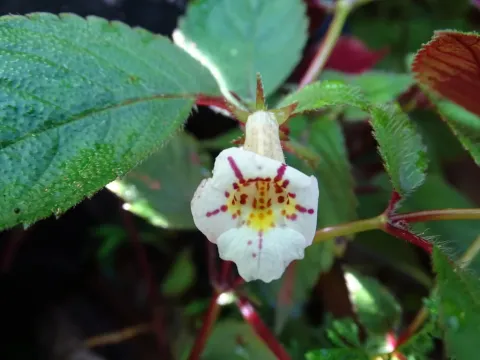
Achimenes candida
Achimenes candida
Achimenes candida is a rhizomatous perennial belonging to the Gesneriaceae family. Native to the tropical regions of Central America, this plant is highly prized for its pure white, trumpet-shaped flowers and trailing habit, making it an excellent candidate for hanging baskets.
What the section contains
Achimenes candida
For optimal growth, Achimenes candida requires bright, indirect light. Direct sunlight should be avoided as it can scorch the delicate foliage. A temperature range between 20°C and 25°C is ideal, as the plant thrives in warm environments and is sensitive to temperatures below 15°C.
The growing medium must be light, airy, and rich in organic matter. A mixture of peat moss, perlite, and leaf mold provides the necessary drainage and aeration for the rhizomes. Good soil structure is crucial to prevent the tubers from rotting due to stagnant water.
Watering practices should be consistent during the active growing season. Keep the soil evenly moist but never waterlogged. As the plant approaches its dormant phase, watering should be gradually reduced until the foliage withers, signaling the start of the required rest period.
Fertilization is essential for prolific blooming. Using a balanced, water-soluble fertilizer with a higher phosphorus content during the summer months will promote flower production and strengthen the overall structure of the plant.
Spider mites are the most common pests affecting Achimenes candida, especially in indoor environments with low humidity. They thrive on the underside of the leaves and can cause rapid decline if not managed with regular misting or appropriate acaricide applications.
Thrips and aphids also pose a significant threat to young shoots and buds. These pests cause distorted growth and can transmit viral diseases. Regular monitoring and the use of insecticidal soap or systemic treatments are necessary to control these infestations effectively.
Root rot is the primary disease concern, typically caused by overwatering or poor drainage. Once the rhizomes become saturated for extended periods, they become susceptible to fungal pathogens like Pythium and Phytophthora, which lead to rapid decay.
Botrytis, or gray mold, can affect the flowers and leaves if the plant is kept in high-humidity conditions with poor air circulation. Removing affected parts and improving ventilation is crucial to halting the spread of the fungus.
General hygiene, such as removing fallen leaves and ensuring pots have adequate drainage holes, significantly reduces the pressure from common plant pathogens. Healthy plant stock is far more resilient to environmental stressors and opportunistic pests.