
Umbel yarrow
Achillea umbellata Sm.
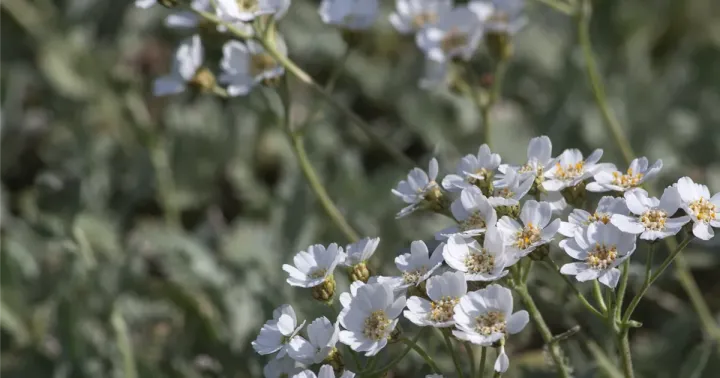
Description
Growing requirements
Umbel yarrow (Achillea umbellata Sm.) is a perennial herbaceous plant belonging to the Asteraceae family. It is native to the mountainous regions of Greece, where it has evolved to thrive in rocky and nutrient-poor environments.
The plant requires well-draining, stony soil with a neutral to alkaline pH level. Its natural habitat is characterized by poor soils, so it is highly suitable for rock gardens and dry slopes where other ornamental species might struggle.
This species is well-known for its drought tolerance and need for full sun exposure. It performs best in areas with high light intensity and low ambient humidity, which helps prevent the development of moisture-related diseases.
Botanically, it is distinguished by its silvery, dissected foliage and flat-topped umbel inflorescences. These features provide a high degree of aesthetic appeal throughout the growing season, even when the plant is not in full bloom.
In practice, umbel yarrow is valued for its low maintenance and high resilience. It is widely used in landscape design to reinforce dry banks, fill gaps in stone walls, and provide ecological benefits by supporting native pollinator populations.
Main diseases and pests
The primary concern for this species is powdery mildew, which often develops when plants are grown in overcrowded conditions with restricted airflow and high humidity.
Root rot is another significant threat, typically occurring if the soil remains waterlogged for extended periods, especially during the dormant winter phase.
Common insect pests include aphids, which may cluster on the flower stalks and young foliage, potentially stunting growth if left untreated during the spring season.
Effective management involves ensuring proper spacing between plants and maintaining adequate drainage to keep the root environment dry and healthy.
When infestation occurs, the use of targeted biological controls is recommended to maintain the health of the plant while preserving beneficial insects in the ecosystem.