
Woolly yarrow
Achillea tomentosa L.
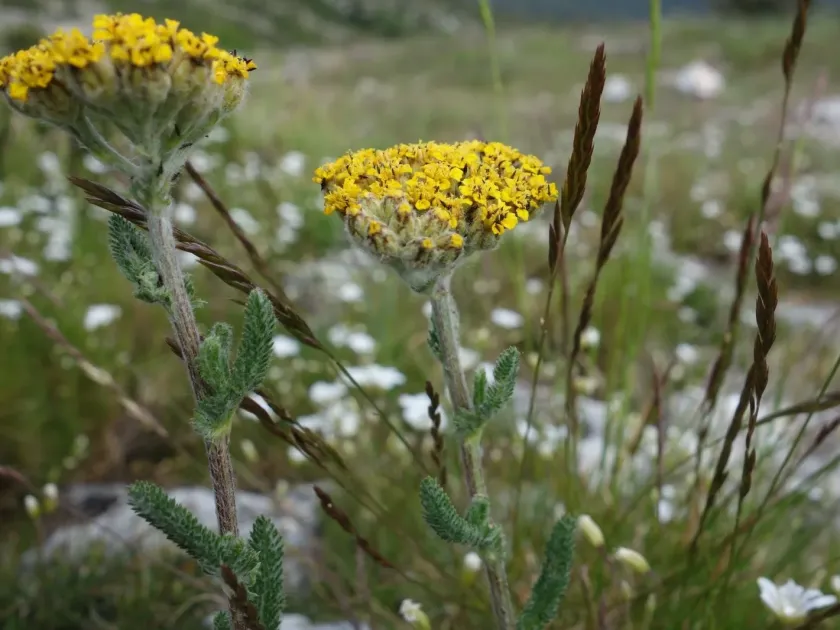
Description
Sowing dates
Propagation via seeds is performed in late winter or early spring. Seeds should be sown on the surface of well-draining potting mix and kept under light conditions, as they need light to germinate properly.
Transplanting seedlings to the garden should occur once the risk of frost has passed. Planting them 8–12 inches apart ensures they can form a uniform mat, creating a dense groundcover that naturally suppresses weeds.
Dividing established clumps every 3–4 years is recommended to keep the plants vigorous. This process is best undertaken in spring or early autumn, ensuring that each division has healthy roots and foliage.
During the planting process, adding coarse sand or grit to the hole improves local drainage. This simple step is vital for longevity, especially in regions with high winter precipitation and humidity.
After flowering, shearing back the spent stalks helps encourage a second flush of foliage and maintains a neat, tidy appearance. This prevents the plant from becoming woody and losing its attractive ground-hugging form.
Growing requirements
Woolly yarrow (Achillea tomentosa) is a perennial flowering plant belonging to the Asteraceae family. It is characterized by its soft, woolly, silver-gray foliage and vibrant yellow flower clusters that bloom in the summer.
Native to dry, stony slopes in Europe and Asia, this species has evolved to thrive in harsh, nutrient-poor conditions. It is a quintessential plant for rock gardens, dry borders, and areas where soil quality is less than ideal.
The plant requires full sun exposure to maintain its compact habit and silver coloration. Providing insufficient light will result in leggy stems and poor flower production, significantly reducing its ornamental value.
Soil drainage is the most critical factor for successful cultivation. It adapts well to sandy or gritty soils but will struggle significantly in heavy, wet clay environments where root rot becomes a major threat.
It is highly drought-tolerant once established, requiring little to no supplemental watering. Its deep root system allows it to access moisture even in the driest summer months, making it an excellent sustainable landscaping choice.
Main diseases and pests
The primary threats to Woolly yarrow are fungal issues, such as powdery mildew, which thrive in humid and poorly ventilated conditions. Ensuring adequate spacing between plants significantly reduces this risk.
Pests like aphids may target the succulent new growth during hot spells. While usually not fatal, heavy infestations can weaken the plant, making it more susceptible to environmental stressors.
Root rot is the most serious threat, caused almost exclusively by improper drainage. Once the crown begins to rot, recovery is rare, emphasizing the importance of preventing standing water near the plant.
Slugs and snails may feed on the young foliage during the early spring months. Protecting young transplants with crushed stone or barriers can help mitigate this damage until the plants are established.
Overall, the plant is remarkably hardy and resistant to most diseases. Proper placement and a "less is more" approach to irrigation are usually sufficient to maintain a healthy and vibrant display.