
Fernleaf yarrow
Achillea filipendulina Lam.
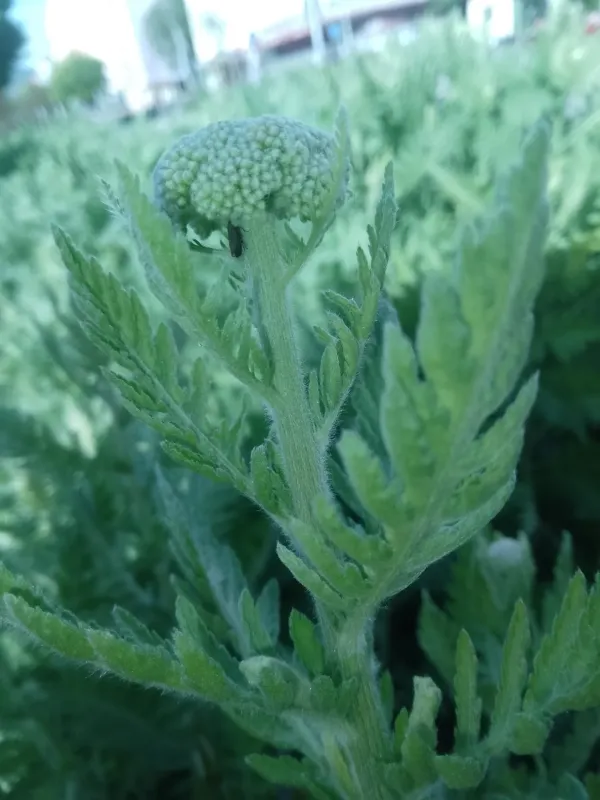
Description
Sowing dates
Sowing of Fernleaf yarrow seeds is typically performed in early spring once the soil temperature consistently reaches 10–12 degrees Celsius. Alternatively, autumn sowing is possible, allowing seeds to naturally stratify over the winter months.
For nursery production, seeds are sown in trays in late March. The seeds are very fine, requiring only a light dusting of soil or vermiculite; they need light to germinate successfully, so avoid deep burial.
For field production, a seeding rate of 1–2 kg per hectare is recommended, with row spacing between 45 and 60 cm to allow for adequate canopy development and easier inter-row cultivation.
Preparation of the seedbed is crucial, as the seedlings are initially slow-growing and struggle to compete with aggressive weeds. A clean, well-tilled field is essential for achieving a high plant density.
Once seedlings emerge, thinning is required to maintain a spacing of approximately 30 cm between plants within rows, which ensures optimal airflow and prevents overcrowding during the peak growth season.
Growing requirements
Fernleaf yarrow, a member of the Asteraceae family, is a highly resilient perennial crop well-adapted to temperate climates. It is particularly valued in agriculture for its exceptional drought tolerance.
This crop thrives in full sun; adequate exposure to sunlight is required to maintain compact growth and high oil content in the foliage. Shaded environments often lead to stunted growth and poor flower quality.
While the plant is undemanding regarding soil quality, it prefers well-drained, sandy-loam soils with a neutral or slightly alkaline pH. Excessive moisture is the primary factor that limits its development.
The plant demonstrates excellent winter hardiness, allowing it to survive extreme temperature drops without requiring special protective covers, making it a reliable perennial choice for many regions.
Minimal soil amendments are needed; however, moderate applications of balanced fertilizers in early spring can significantly boost biomass yield and enhance the vibrancy of the yellow flower heads.
Yield
The yield of Fernleaf yarrow is primarily focused on its floral biomass, which is harvested during peak blooming. Proper management ensures consistent yields over the lifespan of the plantation.
Average dry matter yields range from 3 to 5 tons per hectare. As a long-lived perennial, the crop remains productive for up to 6 years, reducing the annual need for replanting and soil preparation.
Strategic fertilization promotes rapid vegetative growth, but should be managed carefully to ensure the energy of the plant is directed toward flower production rather than excessive leaf development.
Beyond pharmaceutical use, the crop is increasingly grown for the wholesale floral market, where its bright yellow flower heads are sought after for dried flower arrangements and ornamental landscaping.
High adaptability and low maintenance costs contribute to the economic viability of this crop, providing a stable income stream for producers who invest in proper post-harvest processing.
Main diseases and pests
Fernleaf yarrow possesses strong natural resistance to many common agricultural diseases, significantly reducing the dependency on synthetic chemical pesticides during the growing cycle.
Powdery mildew is the most common issue, usually occurring during periods of high humidity and poor ventilation. Proper spacing and weed control are the most effective preventive measures against this fungus.
Pests like aphids and plant bugs may occasionally affect the growing tips. Integrated Pest Management (IPM) practices, such as encouraging beneficial insects, are usually sufficient to manage these populations.
Root rot is rarely an issue unless the crop is planted in heavy, waterlogged soils. Ensuring good field drainage is the simplest and most effective way to avoid this problem entirely.
The plant’s inherent vigor makes it an ideal candidate for organic farming, as it rarely requires intensive medical or protective interventions to thrive in typical field conditions.
Harvesting
Harvesting is performed when the flower heads (corymbs) are fully developed and show an intense yellow color. This represents the stage of maximum essential oil and active compound concentration.
Cuttings are made approximately 15–20 cm below the flower heads. It is important to avoid collecting thick, woody stems, which do not contribute to the final product quality and increase drying time.
The collected material should be dried in a shaded, well-ventilated area or a temperature-controlled drier set to 40–45 degrees Celsius to preserve the essential oils and natural pigments.
Post-drying, the product must be stored in airtight containers or moisture-proof bags in a cool, dark room to maintain its medicinal properties and long-term storage shelf life.
Efficient handling during the harvest stage ensures that the final product meets the high standards required by the medicinal and cosmetic industries, maximizing the value of the crop.