
Hill yarrow
Achillea collina Becker ex Rchb.
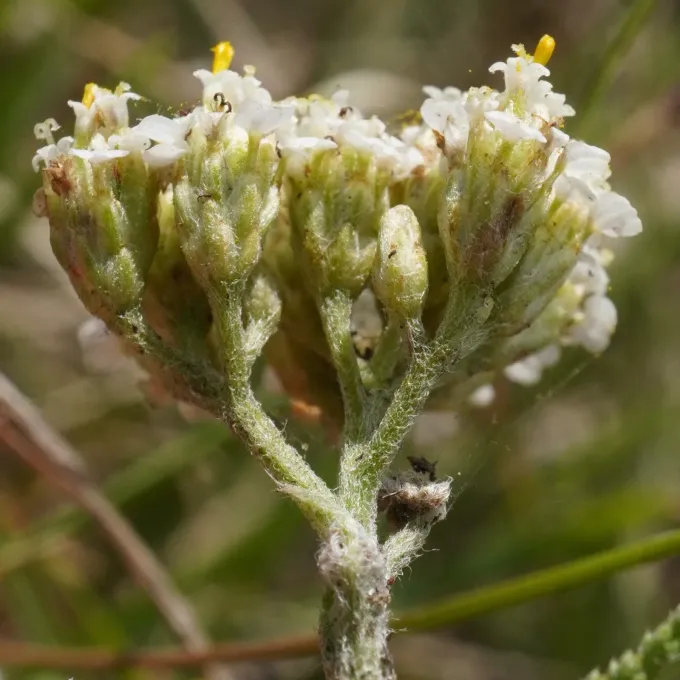
Description
Sowing dates
Sowing hill yarrow is best performed in early spring, once the soil temperature reaches 8–10°C, ensuring optimal conditions for germination and early seedling development.
Winter sowing in late October is also an effective strategy, allowing the seeds to undergo natural stratification, which often results in more vigorous spring growth.
For commercial cultivation, seeds are sown in rows spaced 45–60 cm apart, facilitating mechanized weeding and ensuring sufficient space for individual plant expansion.
Due to the small size of the seeds, they should be covered with a very thin layer of soil, no more than 0.5–1 cm deep, to ensure they do not struggle to emerge.
The standard seeding rate is approximately 0.5–1 kg per hectare, depending on the desired plant density and the specific soil preparation techniques employed.
Growing requirements
Achillea collina is a hardy perennial member of the Asteraceae family, known for its exceptional environmental adaptability and structural resilience in various climates.
This crop thrives in sunny, open locations as it requires significant solar radiation to maximize the production of its characteristic essential oils and active compounds.
It prefers well-drained, light sandy or loamy soils with a neutral pH, though it is remarkably tolerant of poorer soil conditions compared to other commercial herbs.
The plant exhibits high drought resistance thanks to its deep and extensive root system, allowing it to survive in regions with limited rainfall or prolonged dry spells.
Being highly frost-tolerant, hill yarrow can be successfully grown in temperate regions with harsh winters, making it a reliable choice for sustainable agricultural diversification.
Yield
Yields of dried yarrow herb typically range from 1.5 to 3.0 tonnes per hectare, with productivity highly dependent on crop age, fertilization, and general management practices.
Plants reach their maximum biomass production during the second and third years of establishment once the root systems are fully matured and the canopy is dense.
Harvesting should be timed to coincide with the early stages of mass flowering, which is the period when the concentration of medicinal compounds is at its highest.
With proper agronomic care, including weeding and balanced nutrient application, a single plantation can remain productive for a period of five to seven years.
Secondary regrowth following the first harvest can be significant, allowing for multiple cuttings per season in favorable environmental conditions.
Main diseases and pests
Common pests affecting this crop include various aphid species and weevils, which may target the developing buds and reduce the overall quality of the herbal product.
Powdery mildew is the most prevalent fungal disease, particularly in humid conditions or where plant density is too high, preventing adequate airflow between stems.
Rust infections can occasionally appear on the leaves, especially during wet summer seasons, necessitating the removal of affected plant parts to prevent further spread.
Integrated pest management strategies are encouraged, focusing on crop rotation and mechanical maintenance rather than relying exclusively on chemical interventions.
Avoiding waterlogging is critical to prevent root rot, as the species is sensitive to poor soil aeration and stagnant moisture during the winter dormant season.
Harvesting
The harvest is conducted by cutting the aerial parts of the plant at a height of 10–15 cm, which encourages healthy regeneration for subsequent growth cycles.
It is essential to transport the freshly cut biomass to the drying facility immediately to prevent overheating and the degradation of delicate aromatic oils.
Drying should take place in controlled environments with temperatures not exceeding 45°C to ensure the preservation of active compounds and the herb's vibrant color.
Multiple cuttings per year are possible if the soil moisture is managed correctly and if the climate allows for a sufficiently long growing season.
The final dried product is graded based on purity, color, and active compound concentration, meeting the stringent requirements of the herbal and cosmetic markets.