
Wyethia helianthoides
Wyethia helianthoides
Description
Growing requirements
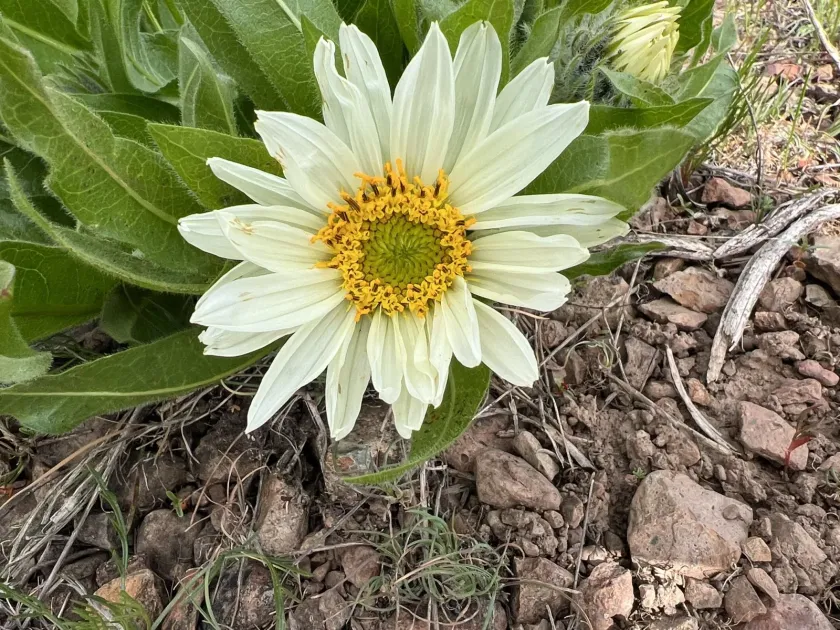
Wyethia helianthoides, commonly known as white mule ears, is a herbaceous perennial plant belonging to the Asteraceae family. It is characterized by its large, sunflower-like flower heads and lanceolate leaves, which provide significant vegetative mass during the growing season.
The species is native to western North America, primarily inhabiting open meadows, mountain slopes, and riparian zones. Its distribution is heavily tied to areas that receive sufficient spring moisture but allow for well-drained soil conditions during the summer maturity phase.
Regarding soil requirements, the plant thrives in medium-textured, nutrient-rich soils. While it exhibits tolerance to varied pH levels, it performs optimally in soils that support deep root penetration, as its perennial rootstock requires stability for long-term survival.
The climate requirements for Wyethia helianthoides involve distinct seasonal transitions. It is adapted to regions with cool, moist springs and warm, dry summers, reflecting its evolutionary origin in temperate mountain ecosystems where it avoids extreme heat stress through early flowering.
In terms of agricultural utility, this species is recognized for its potential in restoring native pastures. Its high-quality forage profile makes it a candidate for sustainable range management, while its robust growth habit helps in soil stabilization and supporting diverse pollinator populations.