
Willowmore Cedar
Widdringtonia schwarzii
Description
Growing requirements
The Willowmore Cedar (Widdringtonia schwarzii) is an evergreen coniferous tree belonging to the Cupressaceae family. It is a rare endemic species restricted to specific rocky kloofs in the Baviaanskloof mountains of the Eastern Cape province in South Africa.
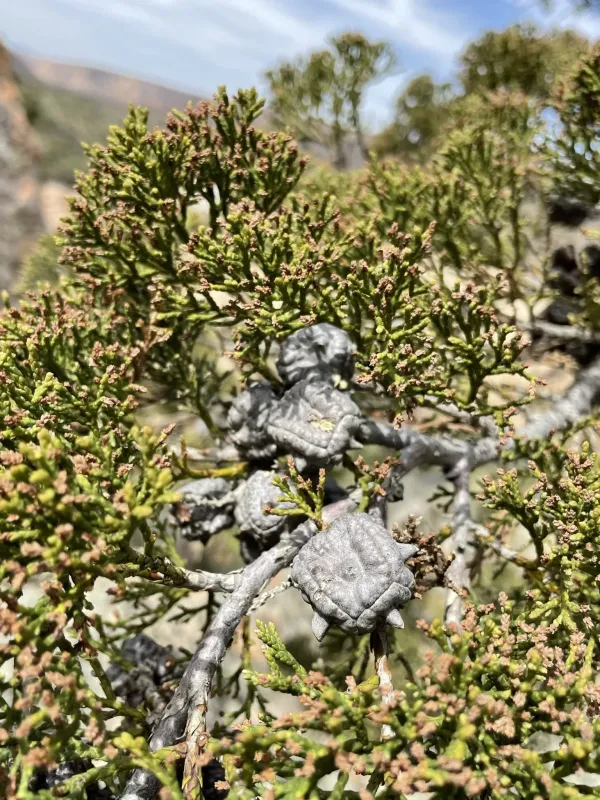
Botanically, the tree exhibits a distinct upright growth habit with dense, dark green scale-like foliage. It is known for its fire-resistant properties, provided by its thick, fibrous bark, which allows mature trees to survive moderate forest fires in their natural mountain habitats.
Regarding climate requirements, the species thrives in Mediterranean-type environments. It prefers areas with mild winters and warm, dry summers. It is not frost-hardy and requires a protected location if grown in temperate regions to avoid severe damage to its younger branches.
The soil requirements involve excellent drainage. The tree is highly susceptible to root rot if water accumulates around the base. Ideally, it should be planted in rocky or gritty substrates that mimic its native habitat, ensuring minimal water retention during the dormant season.
Economically, the species is primarily valued for ornamental and conservation purposes. While historically recognized for its durable wood, today it is primarily a subject for botanical studies and professional horticulture, as it is protected in its natural range to prevent overexploitation.
Main diseases and pests
The primary threat to the health of the Willowmore Cedar is fungal infection caused by poor soil drainage and high humidity. These conditions promote root and collar rot, which can be fatal to the tree if not addressed through strict water management.
Pests such as aphids, mealybugs, and scale insects can significantly impact tree health. These insects feed on the sap of the needles and tender twigs, leading to reduced vigor and increased susceptibility to secondary infections.
Environmental stressors like prolonged droughts in non-native habitats can weaken the tree's immune system, making it more prone to insect attacks. Proper irrigation during dry spells is crucial for cultivated specimens to maintain their resilience.
Preventative measures include regular crown thinning to allow better airflow and light penetration, which helps reduce the occurrence of humidity-loving pathogens. Avoiding overhead watering is also recommended to prevent moisture buildup on the foliage.
In conservation contexts, maintaining genetic diversity and protecting the trees from invasive plant species is vital. Weeds that compete for water and nutrients can hinder the growth of young seedlings, necessitating systematic weeding programs.