
Western red cedar
Thuja plicata Donn. ex D. Don
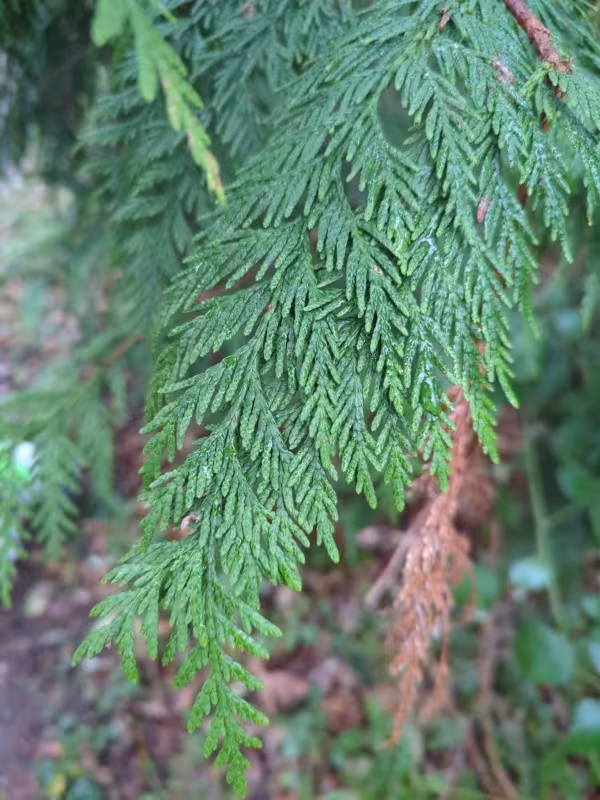
Description
Sowing dates
Western red cedar (Thuja plicata) belongs to the Cupressaceae family. In commercial nursery production, the propagation of this species is primarily achieved through stem cuttings, which ensures the consistency of desired horticultural traits.
Seed propagation is also possible but is typically reserved for large-scale forest reforestation efforts or breeding programs. Seeds require a period of cold stratification to break dormancy and ensure uniform germination rates under controlled greenhouse conditions.
For cuttings, semi-hardwood shoots are harvested and treated with rooting hormones before being placed in a sterile medium such as perlite or peat. Maintaining high humidity through misting systems is crucial during the initial stages of root development.
Young plants are kept in containers or specialized nursery beds for several years, undergoing regular fertilization and structural pruning to develop a robust, uniform root system and a dense, healthy canopy.
Transplanting to a permanent location is best performed during the cooler seasons of spring or autumn, which helps the plant establish its root system before facing the stress of extreme summer or winter weather.
Growing requirements
Native to the Pacific Northwest of North America, Thuja plicata thrives in moist, temperate climates. The tree prefers deep, fertile, and well-draining soils that are slightly acidic to neutral in pH.
While the species exhibits remarkable shade tolerance, optimal growth and needle density are achieved when the trees are planted in sites receiving partial to full sunlight. Protection from cold, desiccating winds is essential for maintaining foliage health.
Adequate soil moisture is a critical factor for the Western red cedar; the root zone should remain consistently moist but not waterlogged. Poor drainage can lead to root hypoxia and make the plant susceptible to soil-borne pathogens.
Mulching the base of the tree is a highly recommended practice, as it helps regulate soil temperature, improves water retention, and minimizes competition from weeds during the critical early growth phases.
Regular monitoring of soil nutrient levels is advised, with the application of balanced, slow-release fertilizers being most effective for supporting steady annual growth without forcing excessive, weak shoots.
Yield
The economic value of Western red cedar is driven by its exceptional timber quality. The wood is naturally resistant to decay, light in weight, and highly aromatic, making it a preferred material for outdoor structures, siding, and shingles.
In the landscape industry, yield is measured by the quality and aesthetic appeal of ornamental specimens. High-demand items include nursery-grown hedging plants and large-caliper trees for specimen planting.
The essential oils and chemical extracts, particularly thujaplicins, are valuable in various industrial applications, including the production of natural preservatives and specialized wood treatments.
Successful management of plantations requires precise spacing to maximize crown development while ensuring high individual tree health, which directly translates into higher commercial returns for the producer.
Integrating Thuja plicata into sustainable agroforestry systems offers long-term benefits, as the tree exhibits a rapid growth rate during its juvenile years, allowing for efficient biomass production compared to many other conifer species.
Main diseases and pests
The main pests affecting Western red cedar include the cedar aphid and various species of mites, such as the spruce spider mite. Infestations can cause premature needle drop and yellowing, significantly impacting the aesthetic value of the trees.
Fungal diseases, including leaf blights and bark necrosis, are significant threats, particularly in dense stands with poor air circulation. Regular pruning to improve air movement and the removal of dead branches are effective prophylactic measures.
- Prevention: Maintain proper site drainage to avoid root rot.
- Monitoring: Watch for needle discoloration on lower branches.
- Control: Use targeted, ecologically safe insecticides for aphid management.
Environmental stress, such as prolonged drought, makes the trees more susceptible to bark beetles and secondary infections. Ensuring the trees have adequate water during dry spells is the best form of defense.
Proper sterilization of pruning tools is essential when working across different areas of a plantation to prevent the transmission of fungal spores or other pathogens from infected branches to healthy tissue.