
Northern White Cedar
Thuja occidentalis L.
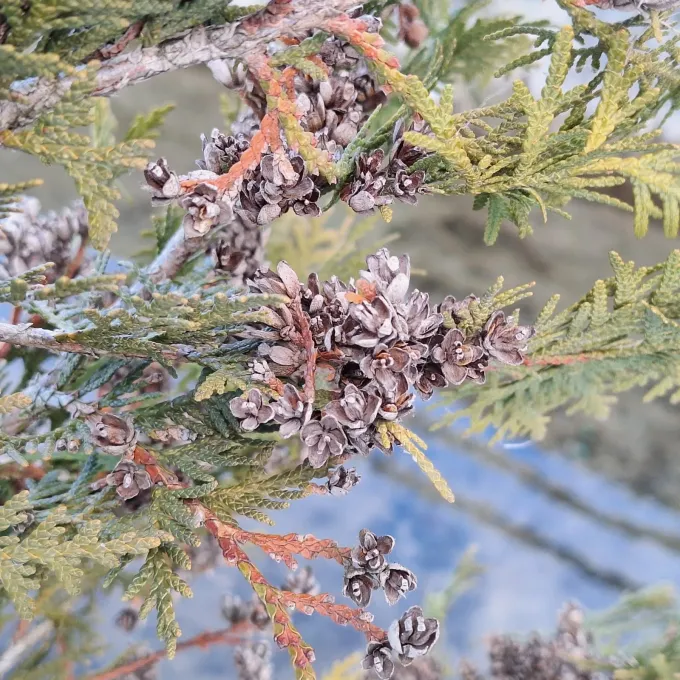
Description
Growing requirements
Northern white cedar (Thuja occidentalis L.) belongs to the Cupressaceae family. Native to Eastern North America, this species is a highly adaptable evergreen conifer that naturally thrives in diverse environments, from limestone outcrops to wetland borders.
Botanically, it features scale-like leaves and a conical habit that is highly prized in horticulture. The species is known for its extreme cold hardiness, making it a reliable choice for landscapes in northern latitudes where other evergreens might fail.
Cultural requirements involve planting in well-drained but consistently moist, slightly acidic to neutral soils. While it can tolerate a variety of soil types, it performs best when protected from extreme, dry winds that can dehydrate the foliage in winter.
Agrotechnical practices include mulching to maintain soil moisture and moderate root temperatures. Young trees require supplemental irrigation during the first two to three years of establishment to ensure robust growth.
Host use of this culture includes the creation of formal and informal privacy screens, hedges, and topiaries. Its evergreen nature and aromatic foliage also provide significant value in urban environmental remediation.
Main diseases and pests
Common pests include the arborvitae leafminer and spider mites. These organisms often target foliage, leading to yellowing or browning. Monitoring is essential during late spring when larvae are most active.
Fungal issues, such as tip blight, are prevalent in poorly ventilated sites or during prolonged humid periods. Proper spacing during initial installation is the most effective cultural method to mitigate these risks.
Root rot, particularly Phytophthora, can become a significant threat if the site suffers from poor drainage. Ensuring that the crown is not buried too deep during planting is crucial for the long-term health of the root system.
Environmental stress, such as winter burn, occurs when the ground is frozen, and the foliage loses moisture to wind. Applying an anti-desiccant spray in late autumn can help protect vulnerable cultivars from excessive water loss.
Regular maintenance, including the removal of dead or diseased branches, is vital for maintaining the aesthetic and physiological vigor of the tree. Utilizing integrated pest management (IPM) strategies helps minimize chemical inputs while ensuring tree safety.