
Thuja Zebrina
Hybrids between Thuja standishii and Thuja plicata
Description
Growing requirements
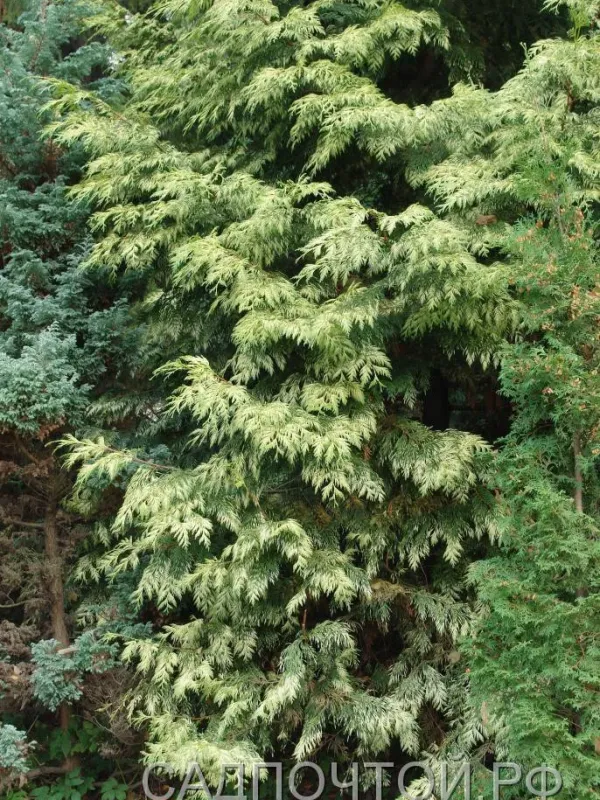
Thuja Zebrina (Thuja standishii x Thuja plicata) is a distinctive hybrid member of the Cupressaceae family. It is widely valued for its vibrant, variegated foliage featuring green and yellow horizontal stripes.
This cultivar thrives in well-drained, fertile soil. It performs best in sites with ample moisture but requires good drainage to prevent waterlogging, which can lead to root system issues.
Ideally, the plant should be placed in a sunny location to enhance its unique color patterns. While it exhibits decent shade tolerance, limited sunlight can lead to a greener, less "striped" appearance.
Routine maintenance includes consistent watering during dry spells and protective mulching to keep the soil temperature stable. Young specimens often benefit from extra care and shelter against harsh winter winds.
Pruning is usually minimal, focused on removing dead or crossing branches to maintain a clean, conical shape. This ensures the plant remains aesthetic and healthy throughout the growing season.
Main diseases and pests
The primary threats to this variety include fungal diseases such as needle cast and root rot. These are often triggered by excessive humidity and stagnant air within the dense foliage.
Common insect pests include spider mites and scale insects. These pests can cause significant damage to the plant by draining sap, leading to stunted growth and discolored needles.
Effective pest management involves monitoring the underside of the foliage for signs of activity. Early intervention with neem oil or specific insecticides is highly recommended for control.
Proper plant spacing during initial planting is the most effective biological defense against fungal infections, as it ensures adequate airflow through the tree's canopy.
In cases of severe infestation or infection, diseased plant material should be carefully removed and destroyed to prevent further spreading across the landscape or nursery stock.