
Warea cuneifolia
Warea cuneifolia
Description
Growing requirements
Warea cuneifolia is an annual herbaceous plant belonging to the Brassicaceae family. It is a specialized species known for its resilience and specific adaptation to the sandy ecosystems of its native environment.
The plant is native to the southeastern United States, with a particular concentration in the state of Florida. It is typically found in sandhill habitats, scrublands, and open areas where soil drainage is excellent and competition from larger vegetation is minimal.
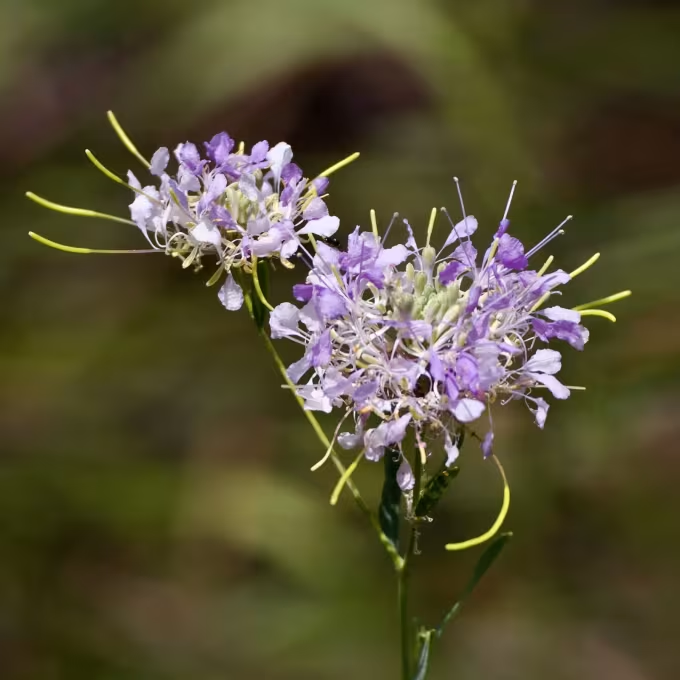
Botanically, Warea cuneifolia is characterized by its slender, erect stems and cuneate (wedge-shaped) leaves. The flowers are typically white or pale pink, arranged in terminal racemes, showcasing the classic floral structure of the mustard family.
This species requires full sun exposure to thrive and complete its life cycle effectively. Insufficient light levels usually result in poor development, reduced flower production, and weaker structural integrity of the main stem.
In terms of soil requirements, Warea cuneifolia prefers deep, well-draining sandy soils. It is highly sensitive to moisture accumulation; therefore, sites that prevent waterlogging are essential for the survival and health of this plant population.