
Golden Waltheria
Waltheria douradinha
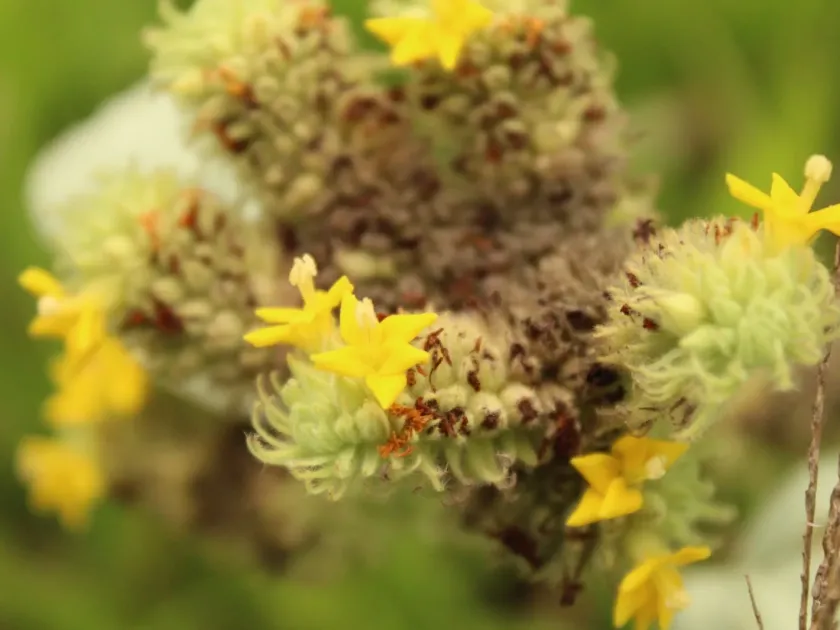
Description
Growing requirements
Golden Waltheria, scientifically known as Waltheria douradinha, is a perennial herbaceous plant belonging to the Malvaceae family. It typically grows as a small subshrub with a distinct velvet texture on its foliage and produces small, bright yellow flowers arranged in dense clusters.
Native to the tropical regions of South America, particularly Brazil and Paraguay, the plant is well-adapted to savanna-like climates. It thrives in open, sunny locations where it can access high levels of solar radiation required for its metabolic development.
When cultivating this species, it is essential to provide well-draining, loose soil with a neutral to slightly acidic pH. The plant exhibits a moderate level of drought tolerance once established, but consistent moisture is preferred during the early stages of the growing season.
The climate requirements include a warm, frost-free environment with average temperatures ranging between 22 and 30 degrees Celsius. Exposure to cold temperatures can cause significant damage to the plant, limiting its agricultural viability to warm climates or controlled greenhouse environments.
The primary economic use for Golden Waltheria is in the pharmaceutical industry. Its leaves and stems are traditionally harvested for their therapeutic properties, specifically for treating respiratory conditions and inflammation, which are attributed to its unique profile of flavonoids.
Main diseases and pests
The main threats to crop health include fungal diseases like root rot and powdery mildew, which are often caused by poor drainage and excessive humidity. Maintaining proper spacing between plants is crucial for air circulation and disease prevention.
Common insect pests include mites and various leaf-chewing larvae. Integrated pest management strategies, focusing on early detection and the use of natural predators, are recommended to maintain high-quality production levels without relying on harsh chemicals.