
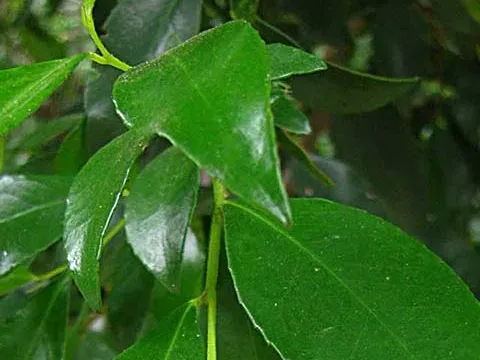
Visnea mocanera
Visnea
Visnea mocanera is a unique evergreen tree belonging to the Pentaphylacaceae family. In its natural habitat, it is an endemic species of the Macaronesian flora, primarily found in the Canary Islands and the Madeira archipelago.
What the section contains

Visnea mocanera
Botanically, the crop presents as a tree or a large shrub with a dense canopy and leathery, lanceolate dark green leaves. The flowering period is marked by the appearance of small, aromatic flowers, followed by the development of fleshy capsules.
For successful development, Visnea requires subtropical climatic conditions with moderate humidity and no extreme temperature fluctuations. The plant prefers well-drained soils rich in humus and does not tolerate waterlogging of the root system.
In landscape design and reforestation, this crop is valued for its high ornamental qualities and its ability to adapt to laurel forest environments. In regions with cooler climates, cultivation is possible only in greenhouses or protected soil environments.
The agrotechnical approach requires regular but controlled irrigation and monitoring of soil pH levels. The plant is responsive to the application of organic fertilizers during the spring period, which stimulates active shoot growth and the formation of healthy foliage.
The main threats to Visnea are fungal infections that occur due to improper moisture management and stagnant water. Root rots can be fatal when grown in heavy clay substrates without adequate drainage systems.
Among insect pests, scale insects and spider mites pose the greatest danger, as they actively colonize the canopy in the dry air conditions of greenhouses. Regular inspection of the leaves helps to mitigate the spread of parasites at an early stage.