
Petunia integrifolia
Petunia integrifolia (Hook.) Schinz & Thell.
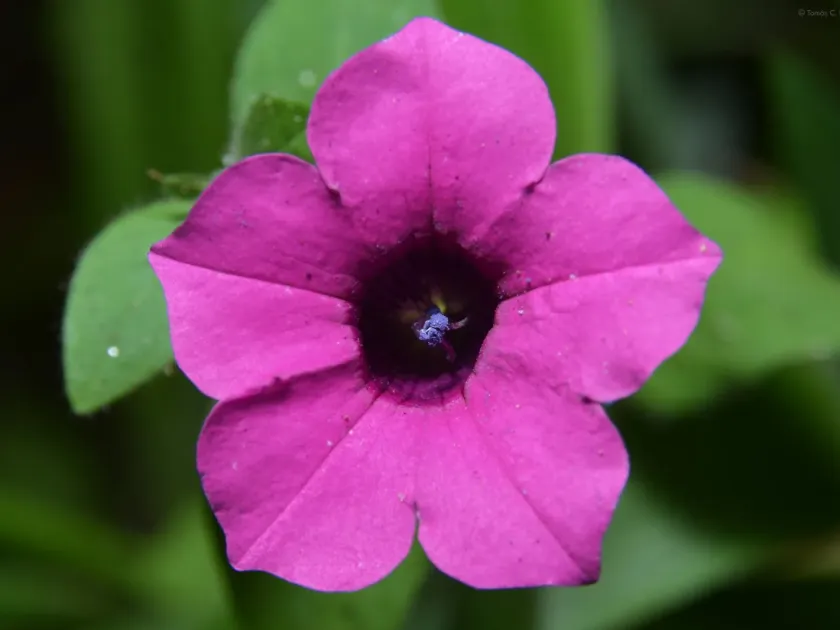
Description
Sowing dates
Petunia integrifolia is a perennial herbaceous plant belonging to the Solanaceae family. In most agricultural settings, it is cultivated as an annual due to its lack of frost resistance and specific thermal requirements for optimal growth.
Propagation is primarily conducted through seeds, which are sown in late winter or early spring. Given their extremely small size, seeds are surface-sown on moist, sterile substrate and require constant light exposure for successful germination.
Maintaining a stable temperature range of 22–24°C is essential during the emergence phase. High air humidity, often achieved by covering the seed trays with plastic or glass, promotes uniform seedling development.
Seedlings undergo a pricking-out process once the first true leaves appear, transferring them into individual pots. This practice encourages a robust, dense root system, which is vital for later survival in outdoor conditions.
Transplanting to the final growing location occurs only after the last frost risk has passed. Hardening off the plants prior to outdoor placement is a critical step to ensure physiological resilience against environmental stress.
Growing requirements
This species is a light-demanding crop that requires full sun exposure to flourish. Insufficient light results in etiolation, where the stems become weak and spindly, significantly reducing the overall floral display.
Well-drained, fertile, and slightly acidic to neutral soils are optimal for Petunia integrifolia. The plant is sensitive to waterlogging, which necessitates excellent soil structure or the addition of organic matter to improve aeration.
Regular irrigation is necessary, particularly during the flowering season. However, water management should focus on maintaining consistent soil moisture without allowing the roots to sit in saturated conditions, which leads to rot.
Nutrient supplementation is key to maintaining vigorous growth and continuous blooming. A balanced NPK fertilizer application, with higher ratios of phosphorus and potassium during the flowering stage, is recommended.
Pinching back the growing tips is a common horticultural practice to promote lateral branching. This results in a fuller, more compact plant habit and increases the total number of flowers produced by the specimen.
Main diseases and pests
Powdery mildew and late blight are the primary fungal threats to this crop. These pathogens thrive in environments with poor air circulation and excessive humidity, often occurring when plant spacing is too dense.
Seedling damping-off, caused by various soil-borne fungi, remains a major concern during the early stages of cultivation. Using sterilized growing media and avoiding over-irrigation are standard preventive measures.
Aphids, spider mites, and whiteflies are the most common pests affecting Petunia integrifolia. These insects cause direct damage by feeding on cell sap, leading to stunted growth, yellowing foliage, and potential virus transmission.
Integrated pest management strategies should be employed, utilizing targeted insecticides when monitoring indicates a population threshold has been reached. Biological control options are increasingly used in professional greenhouse settings.
Preventative hygiene, such as removing infected plant debris and ensuring adequate ventilation between plants, is essential to minimize disease pressure and maintain a healthy, productive crop throughout the growing season.