
Petunia axillaris
Petunia axillaris (Lam.) Britton et al.
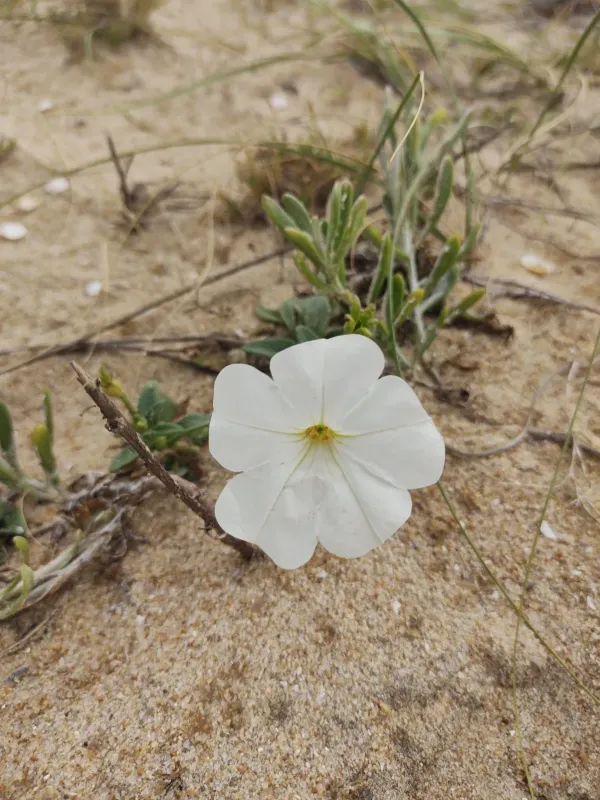
Description
Sowing dates
Petunia axillaris, a member of the Solanaceae family, is a distinct species known for its nocturnal fragrance and white, trumpet-shaped flowers. It plays a significant role in the genetic heritage of modern garden petunia cultivars.
Sowing should begin in late winter or early spring, typically indoors. Since the seeds are minute, they are sown on the surface of a light, moist starter mix without covering them with soil, as they require light for germination.
Consistent environmental control is crucial during the seedling stage. A temperature range between 22 and 24 degrees Celsius should be maintained, accompanied by high humidity under a transparent cover to stimulate rapid development.
Once seedlings have developed their first true leaves, they should be carefully pricked out into individual pots. This transition allows for proper root development and reduces competition between young plants before final transplanting.
Hardening off is a mandatory process before moving the petunias outside. Gradually exposing the plants to outdoor conditions over a two-week period ensures they adapt to fluctuations in temperature and light intensity.
Growing requirements
This species thrives in sunny locations that provide full exposure to light. High light levels are essential for maintaining a compact growth habit and encouraging continuous production of blooms throughout the summer season.
The soil must be fertile, well-draining, and slightly acidic to neutral in pH. Amending the soil with organic matter improves moisture retention while preventing the risk of waterlogging, which the plant does not tolerate well.
Watering should be managed consistently to keep the soil moist but never saturated. During hot summer days, irrigation should focus on the base of the plant to keep the foliage and flowers dry, thereby reducing disease pressure.
Regular fertilization with a balanced, water-soluble fertilizer rich in potassium and phosphorus supports vigorous growth. Feedings are typically performed every two weeks during the active blooming phase to sustain plant vigor.
Proper spacing between plants is important for air circulation. Proper ventilation reduces humidity buildup around the stems, which is a major factor in preventing many fungal pathogens that commonly affect solanaceous plants.
Main diseases and pests
Powdery mildew is a frequent challenge, particularly in humid or stagnant air environments. It manifests as a white, dusty coating on leaves, which can be managed by improving airflow and using appropriate fungicidal treatments.
Damping-off, caused by soil-borne fungi, is a primary concern for seedlings. Using sterile growth media and avoiding excessive watering are the most effective ways to prevent this lethal condition in young plants.
Common insect pests include aphids, whiteflies, and spider mites. These pests typically congregate on the undersides of leaves, causing yellowing and stunted growth; early detection and the use of systemic insecticides are standard solutions.
Root rot occurs if drainage is insufficient. It is characterized by wilting despite moist soil, and often necessitates the removal of affected plants to prevent the spread of the pathogen to neighboring specimens.
Sanitation plays a key role in pest management. Regularly removing faded flowers and dead leaves prevents the accumulation of organic debris, which can serve as a breeding ground for insects and fungal spores.