
Vernonia galamensis
Vernonia galamensis (Cass.) Less.
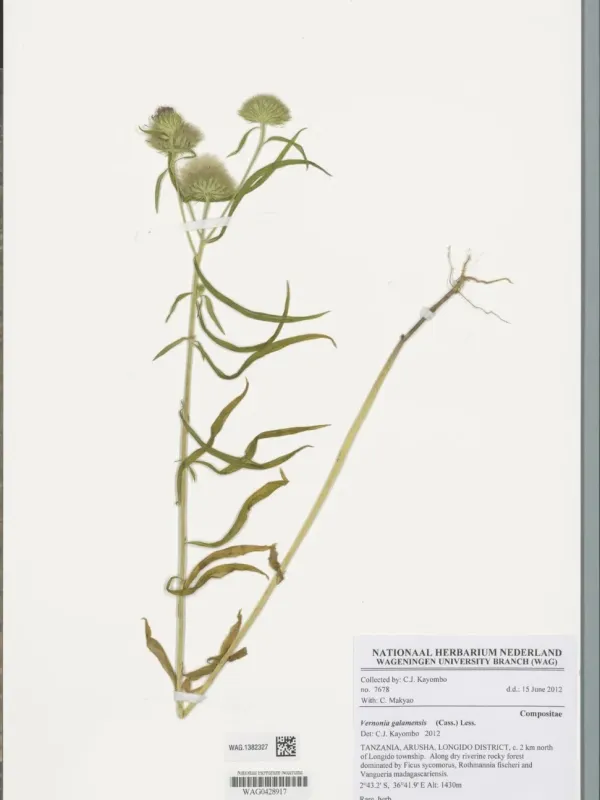
Description
Sowing dates
Vernonia galamensis is a warm-weather crop that requires stable, warm soil temperatures for successful germination and early plant establishment.
Sowing is typically scheduled at the onset of the rainy season, ensuring the seeds have access to sufficient moisture during the critical phase of growth.
Seeds are sown at a shallow depth of approximately 1 to 2 centimeters, allowing for efficient emergence without expending excessive energy reserves.
Spacing must be carefully managed to ensure optimal air circulation and light penetration, which helps in preventing fungal issues within the canopy.
Timely planting is crucial to maximize the vegetative period before the plants shift their energy toward flowering and seed maturation processes.
Growing requirements
As a member of the Asteraceae family, this crop is highly valued for its ability to thrive in arid and semi-arid environments with minimal irrigation.
The plant performs best in well-drained soils, as waterlogging is detrimental to its root system and can lead to significant crop loss during the season.
Full solar radiation is a primary requirement, as the plant needs intense light to fuel the synthesis of lipids within the developing seeds.
While the crop is hardy, providing balanced soil nutrients during the early stages of development significantly boosts the final biomass production.
It is essentially a tropical and subtropical plant that cannot withstand frost, making its geographic distribution limited to warmer climate zones.
Yield
The primary economic value of Vernonia galamensis lies in the high concentration of vernolic acid, an epoxy fatty acid used in industrial applications.
Yields of seeds typically range from 1,500 to 2,500 kilograms per hectare, depending on soil quality, water availability, and local management practices.
The oil content in the seeds is impressive, often reaching up to 40% of dry weight, making it a highly efficient source of specialized vegetable oils.
Efficiency in harvesting and seed processing plays a key role in the overall profitability of the enterprise, allowing for competitive market pricing.
Continuous research into agronomic optimization aims to push these yield limits even higher, supporting the demand for sustainable industrial raw materials.
Main diseases and pests
The most common threats to Vernonia plantations are fungal diseases that proliferate in conditions of high humidity and poor field ventilation.
Insect pests, particularly aphids and certain lepidopteran larvae, can damage young leaves and terminal buds, potentially reducing total seed production.
Weed control is vital during the initial four to six weeks of the plant's life, as seedlings are sensitive to competition for water and soil nutrients.
Integrated pest management strategies are recommended to keep damage below the economic threshold without relying excessively on chemical inputs.
Crop rotation practices help to break the life cycles of common soil-borne pathogens, ensuring the long-term viability of the agricultural land.
Harvesting
Harvesting should occur when the seed heads are fully mature, evidenced by a change in color and a decrease in moisture content within the plant.
Care must be taken to harvest promptly upon maturity to avoid excessive seed shattering caused by wind or mechanical vibration during the process.
Standard harvesting equipment can be utilized, provided that settings such as drum speed and fan pressure are calibrated to handle the small seeds.
Post-harvest drying is an essential step to ensure the seeds reach the optimal storage moisture levels required to maintain oil quality and stability.
Proper storage in cool, dry conditions is necessary to prevent rancidity and microbial growth, preserving the valuable chemical profile of the harvest.