
Vernonia anthelmintica
Vernonia anthelmintica (L.) Willd.
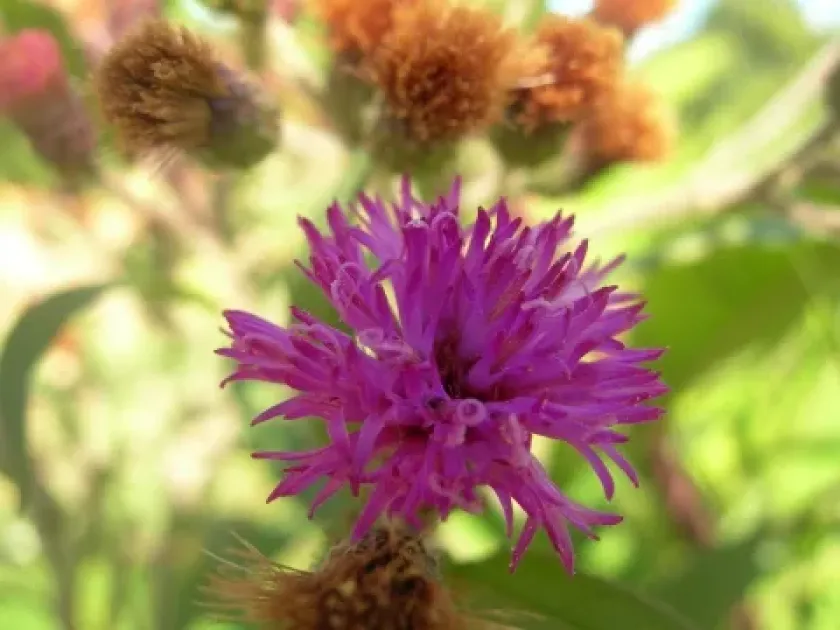
Description
Sowing dates
Vernonia anthelmintica, currently often referred to as Centratherum anthelminticum, is a tropical annual crop. Planting should occur once the soil has warmed up sufficiently, typically at the start of the rainy season in tropical climates.
The seeds require temperatures between 20°C and 25°C to germinate efficiently. Planting in cold or waterlogged soil often leads to seed rot and poor establishment of the crop.
Sowing is conducted in rows spaced 40 to 50 cm apart to facilitate weed control and ensure optimal plant spacing. The seeds should be sown at a shallow depth of 1–2 cm.
Once seedlings emerge, they should be thinned to a spacing of 15–20 cm within the rows to minimize competition for nutrients and sunlight during the critical vegetative stage.
Direct seeding is standard practice for this crop, although pre-germination can be used in experimental or high-value plots to ensure a more uniform stand.
Growing requirements
Belonging to the Asteraceae family, this plant is highly heliophilic and thrives in full sun. Insufficient light exposure will significantly decrease the plant's growth rate and seed oil content.
The crop is adaptable to a range of soil types but prefers well-drained loamy soils. Good drainage is essential, as the species is intolerant to stagnant water, which rapidly causes root damage.
Vernonia anthelmintica prefers a neutral to slightly alkaline pH level. Soils enriched with organic matter provide the best foundation for maximizing crop yields.
The plant has moderate drought tolerance once established, but regular irrigation is necessary during the floral bud initiation and seed development phases to ensure high output.
The native distribution covers parts of tropical Asia, reflecting its requirement for warm, frost-free environments where high temperatures prevail throughout the growing season.
Yield
The primary yield from this crop is its seed, which is rich in fatty oils. Under optimal management, a yield of approximately 1 ton of seed per hectare can be achieved.
The seeds are well-known for their pharmacological properties, specifically as a vermifuge, but they are also increasingly used in the industrial production of technical oils.
Productivity is directly linked to the plant's branching habit. A well-branched plant produces a higher number of flower heads and, consequently, more seed heads per plant.
Weed management in the first month is critical, as the crop exhibits slow early growth. Controlling weeds early ensures the plant can capture necessary resources to maximize seed production.
Proper harvest timing is essential for final yield quality, as premature harvesting leads to immature seeds, while delayed harvesting results in significant losses due to natural seed shattering.
Main diseases and pests
The most common issues for this crop involve fungal pathogens that thrive in high humidity. Leaf spot diseases and powdery mildew are frequently reported in dense, poorly ventilated stands.
Pests, particularly aphids and spider mites, are problematic. These insects feed on the sap of young stems and leaves, reducing the plant's overall vigor and yield potential.
Root rots are the most severe threat, usually occurring due to excessive soil moisture or improper drainage. Once root rot is established, recovery is rarely possible.
Integrated pest management strategies are recommended, focusing on the use of biological control agents to preserve the pharmacological safety of the seed oil.
Crop rotation is a vital preventive measure to reduce soil-borne pathogen pressure and maintain soil health over multiple growing seasons.
Harvesting
Harvesting is performed when the flower heads transition from green to a deep brown color, indicating maturity. At this stage, the seeds are firm and ready for collection.
The plants are typically harvested by cutting the stems, followed by a drying period in a shaded, well-ventilated area to allow the moisture content to drop naturally.
Threshing is conducted once the plant material is sufficiently dry. It is important to avoid aggressive threshing methods to prevent damage to the oily seeds.
After threshing, seeds must be cleaned to remove debris and then stored at a moisture level below 10% to prevent fungal growth and oil rancidity during storage.
Storage facilities should be cool and dry, with protection from rodents and warehouse pests, ensuring the chemical integrity of the seeds for medicinal or industrial extraction.