
Hoary vervain
Verbena stricta Vent.
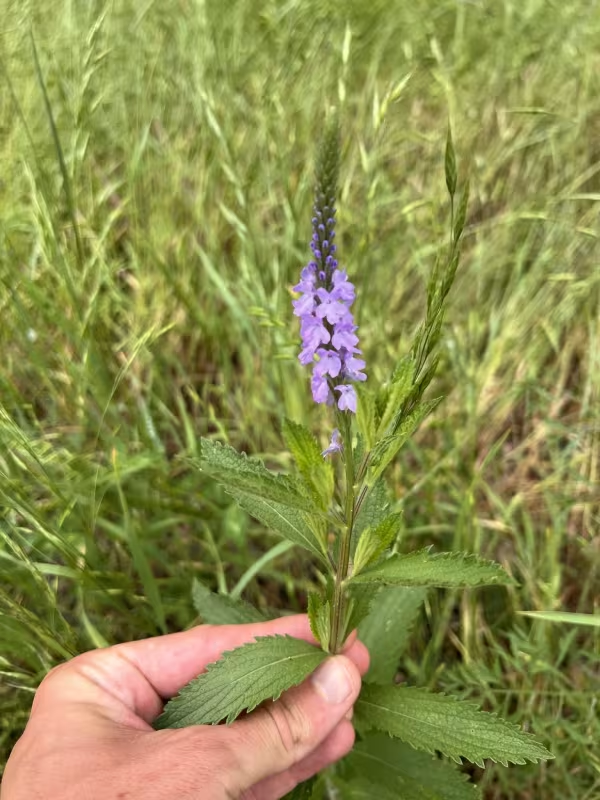
Description
Sowing dates
Hoary vervain (Verbena stricta) is a perennial herbaceous plant belonging to the Verbenaceae family. In agricultural and horticultural contexts, seeds are sown primarily in the spring once the soil temperature is sufficient to trigger germination processes.
To enhance seedling emergence, seeds are subjected to stratification for 2–4 weeks at cool temperatures. The optimal sowing method involves planting in prepared substrate at a depth of no more than 0.5–1 cm to allow light access, which is crucial for germination.
When cultivating via transplants, seeds are started indoors in greenhouses or cold frames during March. Pricking out is performed after the appearance of two sets of true leaves to facilitate root system development.
Transplanting into open ground occurs in late May, ensuring all risk of frost has passed. The planting layout should account for the vigorous growth of the root system and the need for adequate air circulation to prevent fungal issues.
Plant density depends on the intended use: for landscape groupings or meadows, a spacing of 30–40 cm between individual plants is generally recommended.
Growing requirements
This crop has moderate soil requirements, preferring loose, well-drained loams or sandy soils with a neutral to slightly alkaline pH level.
Hoary vervain is a heliophilous (sun-loving) species; therefore, for optimal development and prolific flowering, it must be grown in open, well-lit areas without prolonged shading.
The plant exhibits high drought tolerance due to its deep taproot system, which reaches deep into the subsoil, making it well-suited for regions with irregular rainfall patterns.
A critical factor for success is the prevention of water stagnation, as excessive soil moisture inevitably leads to root crown rot and the decline of the perennial plant.
The species displays good winter hardiness in temperate climates, although in northern regions with little snow cover, light protection with mulching materials may be advisable during the dormant season.
Main diseases and pests
The primary threats to hoary vervain are fungal diseases that thrive in conditions of high humidity and waterlogged soil, most notably powdery mildew.
To prevent the spread of these infections, it is essential to follow proper crop rotation practices and avoid overcrowding the plants to ensure constant airflow around the foliage.
Among insect pests, aphids and spider mites pose the greatest risk, as they flourish in hot, dry weather by feeding on the sap of young stems and leaves.
Control of insect pests is best achieved through the application of broad-spectrum insecticides or biological control agents, which are most effective when applied at the onset of an infestation.
Regular monitoring of plant health and the prompt removal of affected tissues allow growers to minimize losses and maintain the aesthetic and ecological value of the crop throughout the season.