
Veined verbena
Verbena rigida Spreng.
Description
Sowing dates
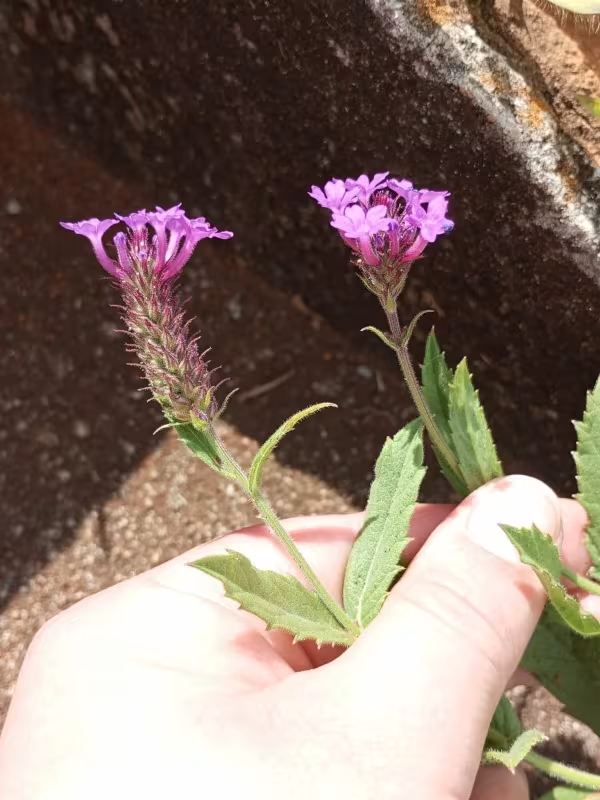
Veined verbena (Verbena rigida Spreng.) is a herbaceous perennial belonging to the Verbenaceae family, known for its rigid stems and vibrant purple-violet clusters.
Propagation is primarily done via seeds, which should be sown indoors during late winter or early spring to ensure a long growing season for the plant.
Seeds benefit significantly from a cold stratification period of several weeks, which helps break dormancy and ensures a more uniform germination rate.
Seedlings should be moved to individual pots as they develop true leaves, ensuring they have sufficient light to prevent them from becoming leggy and weak.
Transplanting into open ground must occur only after the danger of frost has completely passed and the soil has warmed up to promote rapid root establishment.
Growing requirements
This species thrives in full sun, requiring at least six to eight hours of direct light daily to maintain its structural integrity and encourage vigorous flowering.
Well-draining, moderately fertile soil is essential for success. Heavy clay soils should be amended with organic matter or sand to prevent root rot and waterlogging.
While the plant is somewhat drought-tolerant once established, consistent soil moisture is preferred during the peak summer heat to maintain continuous blooming.
Minimal fertilizing is usually sufficient, but a balanced slow-release fertilizer at the start of the season can support better growth and longer flowering cycles.
In cooler climates, the plant may not overwinter reliably, so gardeners often treat it as an annual or apply a thick layer of mulch for winter protection.
Main diseases and pests
Powdery mildew is the most common fungal issue, often triggered by high humidity levels or poor air circulation within dense plantings of the verbena.
Aphids and spider mites are typical pests that can infest the foliage, particularly during dry spells, causing yellowing and weakening of the plant structure.
Effective management involves maintaining proper spacing between plants to enhance airflow and using appropriate insecticidal soaps if an infestation occurs.
Root rot caused by waterlogged conditions is a significant risk, highlighting the necessity of planting the species in well-structured, porous soil types.
Regular monitoring for signs of stress, such as wilting or discolored spots, is crucial for preserving the health and aesthetic value of the planting area.