
New Mexico vervain
Verbena neomexicana
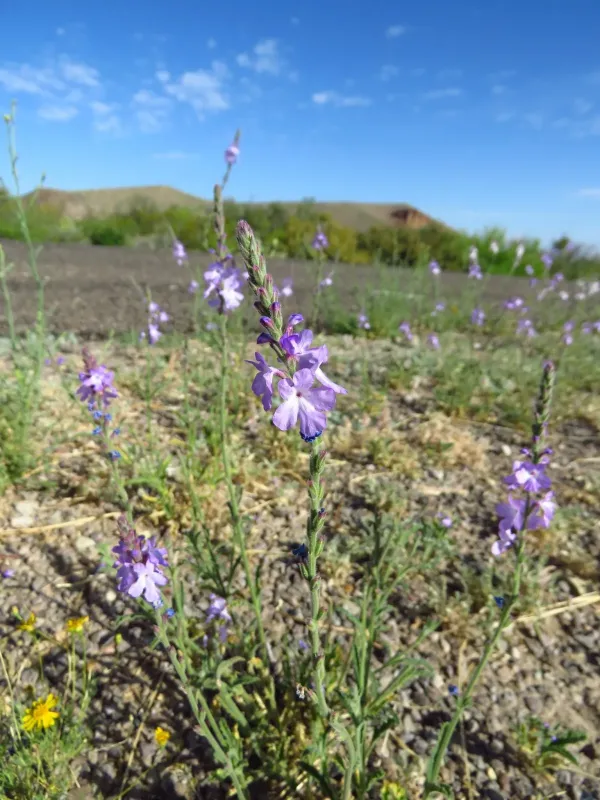
Description
Sowing dates
Seeds of Verbena neomexicana are typically sown indoors in late winter or early spring, about 8 to 10 weeks before the last expected frost. Pre-chilling the seeds for a few weeks can significantly improve germination rates, as it mimics natural cycles.
The seeds should be sown on the surface of a light, well-draining seed-starting mix, as they require light to germinate effectively. Do not cover them deeply; a light dusting of medium is sufficient.
Maintain temperatures between 18 and 22 degrees Celsius to encourage steady growth. Keep the medium consistently moist but not waterlogged during the germination period to ensure healthy seedling development.
Once the seedlings develop two sets of true leaves, they should be transplanted into individual pots. This practice encourages the development of a robust root system, which is vital for the plant's future drought tolerance.
Hardening off the seedlings is an essential step before planting them in their permanent location. Gradually exposing the plants to outdoor sunlight and wind over a week helps them transition without transplant shock.
Growing requirements
New Mexico vervain, a member of the Verbenaceae family, is native to the arid and rocky landscapes of the southwestern United States and Mexico. It is specifically adapted to environments with intense sun and very low water availability.
The plant thrives in sandy or rocky soils with excellent drainage. In home gardens, it is crucial to avoid rich, heavy soils that retain too much moisture, as these can quickly lead to root rot and other physiological issues.
This species is exceptionally drought-tolerant once established and performs best in full sun exposure. It is an ideal candidate for xeriscaping or rock gardens where other, more thirsty plants might fail to thrive.
While the species is hardy, it benefits from moderate spacing to promote airflow. Good circulation around the foliage is a key factor in keeping the plant healthy and minimizing the impact of humidity.
Fertilization should be handled with caution. Since it is native to nutrient-poor soils, an overabundance of nitrogen can result in excessive foliage growth, which often leads to a weaker, less floriferous plant structure.
Main diseases and pests
Powdery mildew is the most common fungal disease affecting New Mexico vervain, particularly in climates with high humidity or poor air circulation. Symptoms appear as a white dust-like coating on the foliage.
Root rot remains a primary concern in poorly drained soils. If the roots remain saturated for extended periods, the plant will decline rapidly, often showing yellowing of lower leaves and stem collapse.
Spider mites are common pests that thrive during hot, dry weather. They often infest the undersides of the leaves, causing stippling and eventual browning of the foliage if left unchecked.
Aphids can also pose a threat, particularly to tender new growth. Regular inspection of the growing tips and the use of insecticidal soaps or neem oil can help manage populations before they cause significant damage.
Sanitation is a vital component of integrated pest management. Removing spent flower stalks and clearing debris from around the base of the plant reduces hiding spots for pests and improves overall garden hygiene.