
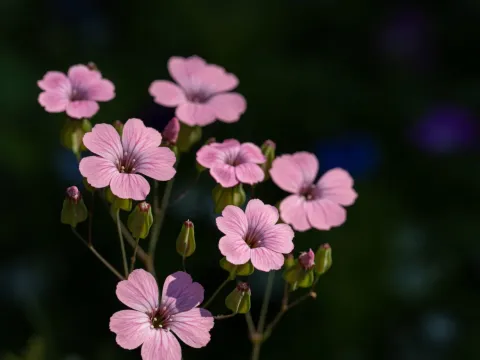
Cow soapwort
Vaccaria
Cow soapwort (Vaccaria hispanica) is an annual herbaceous plant belonging to the Caryophyllaceae family. As a thermophilic species, it thrives when soil temperatures reach 10–12°C, making it suitable for spring sowing.
What the section contains

Cow soapwort
The optimal time for sowing is early spring, as soon as the soil is workable. Early planting allows the crop to utilize soil moisture effectively, which is critical for strong initial establishment.
It is typically sown using standard row-seeding methods, with a row spacing of 15–20 cm. Seeds should be planted at a shallow depth of 2–3 cm to ensure uniform germination across the field.
The seeding rate is approximately 8–12 kg per hectare. Excessive density must be avoided, as it causes plants to become spindly, increasing the risk of lodging before maturity.
Post-seeding rolling is an essential agronomic practice. It improves soil-to-seed contact, ensuring faster and more uniform seedling emergence, which is vital for achieving a balanced plant stand.
While not overly demanding, the plant performs best in light, fertile loamy or sandy soils with a neutral to slightly alkaline pH. It does not tolerate waterlogged conditions or poor drainage.
Cow soapwort is a light-loving plant; therefore, cultivation sites should be open and free from any shading. Reduced sunlight exposure negatively impacts the synthesis of active biological compounds.
The crop is relatively drought-tolerant once established, but it requires consistent moisture during germination and the early vegetative growth phase. Extreme water deficit can severely hinder development.
In crop rotation, it should not be planted in the same field more than once every 3–4 years. Ideal predecessors include cereal grains or row crops that help maintain good soil structure.
The plant responds well to phosphorus and potassium fertilization. Nitrogen should be applied sparingly, as over-fertilization can promote excessive vegetative growth at the expense of seed quality.
With proper management, the seed yield typically ranges from 0.8 to 1.5 tons per hectare. Final productivity is highly dependent on weather conditions during the flowering and seed-filling stages.
The primary economic value lies in the seeds, which contain saponins and other phytochemicals. Consequently, maintaining optimal growth conditions throughout the season is crucial for high-quality production.
Effective weed management is necessary, as competition during the early stages of growth is the most significant factor in yield reduction. Mechanical inter-row cultivation is highly effective.
Monitoring the maturity stage is essential to maximize harvest. Because the seeds are prone to shedding once ripe, timely harvesting is required to prevent significant field losses.
Advanced agrotechnical practices, including appropriate pest control and correct harvest timing, allow growers to achieve stable, high-quality yields in various climatic conditions.
Root rot is the most common disease threat, often triggered by excessive soil moisture or poor drainage. Seed treatment prior to planting is a standard preventative measure.
Pests like aphids and thrips can cause damage during dry seasons by feeding on the sap of young stems and buds. If infestations reach economic thresholds, approved insecticides should be used.
Weeds present a major challenge, especially during the first few weeks. Regular inter-row cultivation is the primary method used to maintain a clean field and minimize resource competition.
Fusarium wilt may occasionally affect the crop if the soil is contaminated or if the crop rotation sequence is too short. Field hygiene and spatial isolation are key to reducing risk.
Consistent crop monitoring is vital. Scouting for early signs of disease or pest outbreaks allows for timely intervention, ensuring the long-term health and viability of the harvest.
The harvest begins when the seed pods turn brownish, indicating that the seeds have reached full maturity. Timing is critical to prevent the pods from bursting and losing seeds.
The most common approach is swathing, followed by threshing once the plants have dried. This process ensures better seed quality and reduces mechanical damage during the final steps.
During threshing, it is important to adjust the combine drum speed to a minimum setting. The seeds are delicate, and improper equipment calibration can result in high breakage rates.
Immediately after threshing, seeds must be cleaned and dried to a moisture content of 12–13%. Proper drying is essential to prevent mold growth and maintain the potency of active compounds.
Storage should take place in dry, well-ventilated facilities. Maintaining stable conditions helps preserve the shelf life and quality of the seeds until they are processed for their end uses.