
Uraria picta
Uraria picta
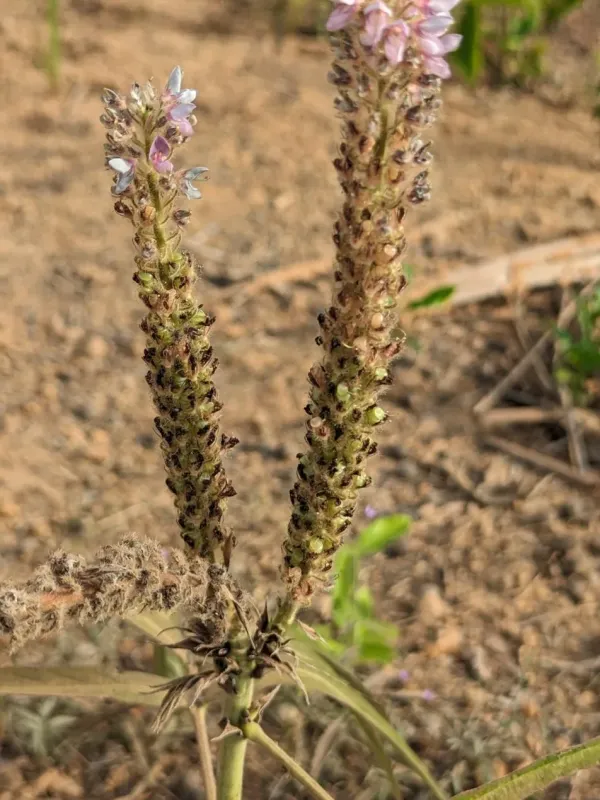
Description
Sowing dates
Uraria picta is a herbaceous perennial plant belonging to the Fabaceae family. Successful cultivation begins with seed scarification to overcome seed coat dormancy and ensure uniform germination across the field.
Sowing should take place in well-prepared, warm soil as the plant is native to tropical climates and requires high temperatures for optimal establishment. The ideal sowing depth is approximately 1.5 centimeters.
In nursery conditions, seeds are often sown in seedling trays to ensure controlled growth during the early stages. Transplanting occurs after the seedlings develop a robust root system and several sets of true leaves.
The spacing between rows is critical, typically ranging from 45 to 60 centimeters, to facilitate adequate sunlight penetration and airflow, which are essential for the plant's structural development.
Proper water management during the germination phase is vital. The substrate should be kept consistently moist but not saturated, as excess water can severely hinder seedling vigor and lead to pre-emergence damping-off.
Growing requirements
Uraria picta thrives in full sunlight and requires well-drained, sandy loam soils to flourish. It is highly intolerant of waterlogged conditions and heavy soils that limit oxygen supply to the roots.
The plant grows best in areas with an average annual temperature range of 22°C to 30°C. While it is somewhat drought-tolerant once established, supplementary irrigation during prolonged dry spells significantly boosts biomass production.
Soil preparation involves deep tillage and the incorporation of well-rotted organic matter. As a leguminous crop, it forms symbiotic relationships with bacteria that fix atmospheric nitrogen, reducing the need for synthetic nitrogen fertilizers.
Routine weeding is necessary, particularly during the first weeks after germination, as the plant is sensitive to competition from aggressive weeds. Integrated pest management practices are recommended to maintain field health.
The crop does not tolerate frost. In regions with fluctuating temperatures, it is typically treated as an annual or grown in controlled environments to prevent cold-induced damage to the stem and roots.
Yield
The economic yield of Uraria picta is primarily derived from its dried root system and aerial biomass. Under optimal agricultural management, the plant provides a consistent yield suitable for both raw material production and pharmaceutical processing.
Yields can vary significantly based on soil fertility and irrigation frequency. Harvesting the roots is typically planned for the second year of growth to ensure a high accumulation of secondary metabolites.
Aerial biomass yield is measured in tonnes per hectare and is collected during the peak flowering stage to maximize the concentration of alkaloids and other bioactive compounds.
Post-harvest processing, including cleaning, sorting, and standardized drying procedures, is critical to ensuring the final product meets industrial quality and safety standards.
Productivity is also linked to the plant's ability to maintain health throughout the growth cycle, necessitating regular monitoring for potential pest infestations or nutrient deficiencies.
Main diseases and pests
Uraria picta is relatively resistant to many common agricultural pests; however, it can be susceptible to root-knot nematodes in specific soil types. Proper soil solarization or the use of resistant varieties can mitigate these risks.
Fungal diseases, such as those caused by Rhizoctonia or Fusarium species, may appear if the soil drainage is poor or if excessive humidity persists for extended periods.
Leaf-eating insects and aphids can cause damage during the vegetative stage. Regular field scouting and the application of organic-certified deterrents are usually sufficient to control localized outbreaks.
Weeds represent a significant threat to young plants, as they compete for sunlight, water, and nutrients. Mechanical cultivation between rows is the preferred method for weed management in organic plots.
Proper crop rotation practices, avoiding other leguminous crops in immediate succession, help break disease cycles and maintain overall field productivity and soil health.
Harvesting
Harvesting is executed based on the intended use of the plant material. Root harvesting is a delicate process, typically involving mechanical lifting that avoids deep cuts or damage to the medicinal part of the root system.
Aerial parts are harvested using standard cutting machinery during the flowering season. Immediate transport to drying facilities is essential to prevent moisture-induced spoilage of the harvested material.
Drying is performed in climate-controlled environments at temperatures not exceeding 45°C to preserve the integrity of heat-sensitive chemical constituents within the tissues.
Once dried, the plant material is sorted, milled (if required), and packaged in moisture-resistant containers to ensure long-term stability during storage and distribution.
Proper record-keeping of the harvest time and processing conditions is required to maintain traceability, which is a mandatory requirement for raw materials entering the pharmaceutical supply chain.